
 By Shishir Prashant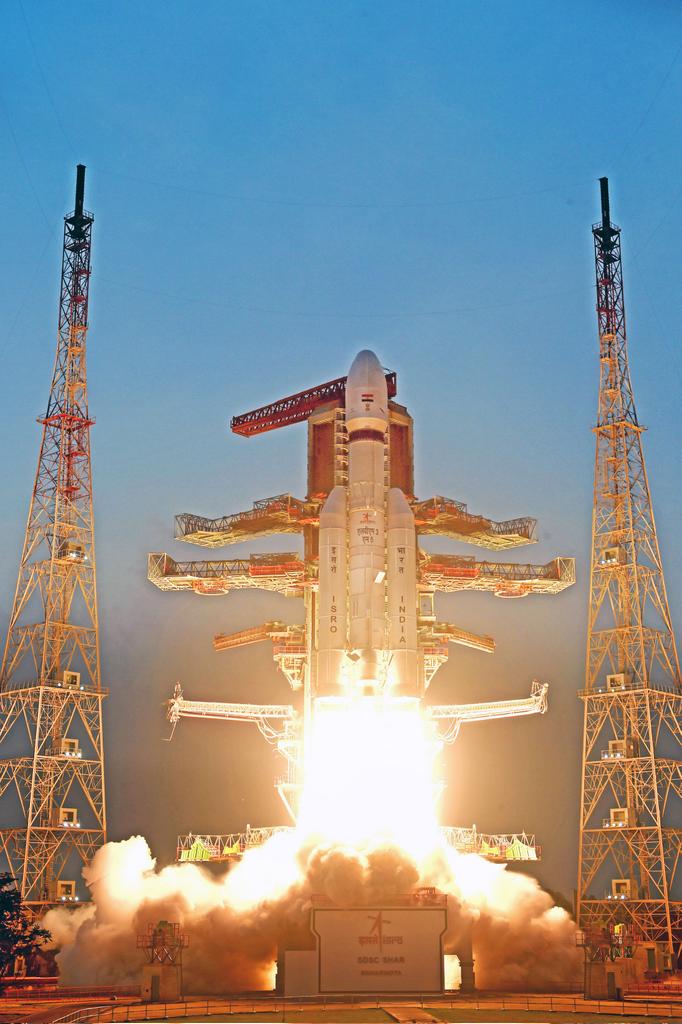
PrashantNews
India is planning to send an astronaut to Moon by 2040 and establish a space station by 2035 as part of its space expansion programmes, Parliament was told on major missions by ISRO on Wednesday.
“The Space Vision 2047 of the Government targets establishment of the Bharatiya Antariksh Station by 2035 and landing of an Indian on Moon by 2040,” the Parliament was told during a question answer session.
ISRO has launched 22 satellites during the last 5 years which include 7 for Earth Observation, 4 communication, 2 navigation, 3 space science and 6 technology demonstration missions.
Recently, the scope of Gaganyaan programme was revised from three to eight mission including additional uncrewed mission (G1) and also four precursor missions for Bharatiya Antariksh Station (BAS) with total revised budget provision of ₹20,193Crore. The activities as per revised approval is in progress with target of first Crewed mission in year 2027-28.
For the Gaganyaan programme, ISRO is developing and realising various systems for accomplishing the planned missions. Considering the stringent human rating requirements, extensive testing of propulsion elements, structures of Human-Rated Launch Vehicle (HLVM3), Service Module Propulsion System and Crew Module Propulsion System, parachute-based deceleration system has been completed. The critical Crew Escape System motors have also been developed and static tests have been completed. In parallel, development of indigenous Environmental Control and Life Support Systems is in progress.
India has achieved self-reliance in space transportation systems to launch satellites up to 10 tons to Low Earth Orbit (LEO) and 4.2 tons to Geo-Synchronous Transfer Orbit (GTO) through the currently operational PSLV, GSLV and LVM3 launch vehicles. These launch vehicles have enabled independent space access to satellites for earth observation, communication, navigation and space exploration.
In order to enhance the launch vehicle capabilities towards meeting the expanded space vision, Government has approved the development of a Next Generation Launch Vehicle (NGLV) which will provide a maximum payload capability of 30 tons to Low Earth Orbit. Towards achieving low-cost access to space, reusable launch vehicle technologies are also being developed including a partially reusable variant of NGLV with 14 tons payload capability to LEO. Another development is of a winged body upper stage which will fly back from the orbit to the Earth and autonomously land on a runway.
The Government proposes to increase budget allocation for critical space infrastructure and R&D projects of the Department of Space. The Space Vision 2047 of the Government targets establishment of the Bharatiya Antariksh Station by 2035 and landing of an Indian on Moon by 2040. Towards this, Government has approved five key R&D intensive projects: the Gaganyaan follow-on mission; the Chandrayaan follow-on missions including Chandrayaan-4 Lunar Sample Return Mission and the Chandrayaan-5/LUPEX mission; the Venus Orbiter Mission; and the development of the Next Generation Launch Vehicle.
As part of the expansion of ground infrastructure for achieving the Space Vision, Government has approved two more launch pads – one at Kulasekarapattinam in Tamil Nadu and a Third Launch Pad for the next generation of Launch Vehicles.