
 By Shishir Prashant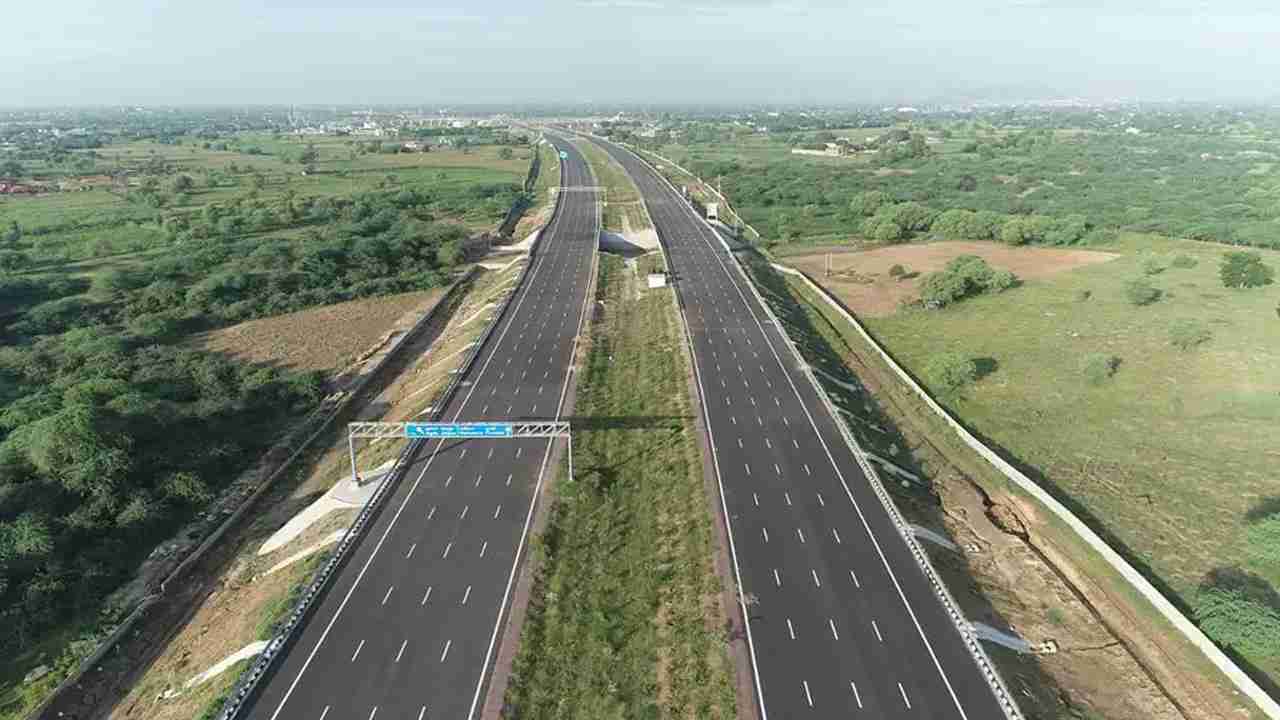
PrashantNews
A day before Prime Minister Narendra Modi inaugurates the 213 km long Delhi-Dehradun expressway, Uttarakhand Forest Minister Subodh Uniyal on Monday said the key feature of the mega eco-friendly project is its 12 km long wildlife corridor which he claimed would serve as a protective shield for wild animals and claimed 33840 trees were saved.
The Minister said a total of 11160 trees were cut for the project against the earlier estimate of cutting 45000 trees. “Thus we managed to save 33,840 trees by following the advice of scientists and using some modern techniques,” Uniyal noted. The journey between the two cities is likely to be completed in 2-2.5 hours through this project.
Since the Expressway Project Encompasses 20 Kilometers of Forest Area, the wildlife corridor will play a crucial role in safeguarding the wildlife which includes elephants, he said.
Moreover, its construction holds strong potential to significantly reduce human-wildlife conflict, Uniyal claimed. “This 12-kilometer-long structure —Asia’s longest elevated corridor—is being hailed as an exemplary model of the balance between development and ecology,” he said.
While interacting with the media in Dehradun, he provided details regarding the benefits that this corridor will bring to the forests and the wildlife as 20-km stretch of this project traverses through the dense forest zones of Uttar Pradesh’s Shivalik Forest Division, as well as Uttarakhand’s Rajaji Tiger Reserve and Dehradun Forest Division. “This project stands as an outstanding example of establishing a harmonious balance between developmental progress and environmental conservation,” Uniyal said.
The Forest Minister said under this project, extensive compensatory afforestation has been undertaken in both Uttarakhand and Uttar Pradesh to offset the transfer of forest land. Compensatory plantation activities were carried out across a total area of 165.5 hectares, resulting in the planting of 195,000 trees. Furthermore, under the guidance of the Supreme Court Monitoring Committee, various eco-restoration initiatives aimed at forest and wildlife conservation are being executed utilizing an additional fund allocation of ₹40 crores.
He said the wildlife corridor has been specifically designed to facilitate the safe passage of wild animals. The structure includes dedicated underpasses for elephants as well as crossings for wildlife species for their unimpeded movements.
He said during the construction of the project, all necessary precautionary measures were adopted, prioritizing the safety of wildlife. As part of these measures, provisions such as sound barriers and light barriers have been implemented to ensure that noise and light pollution have only a minimal impact on the wildlife.
Uniyal emphasized that the construction of this elevated corridor would lead to a reduction in human-wildlife conflict.
He further noted that the construction of the corridor would result in a reduction of 240 million tons of carbon dioxide emissions over the next 20 years—an amount equivalent to the carbon dioxide absorption capacity of approximately 6 to 6.8 million trees. Additionally, it is expected to yield a 19 percent saving in fuel consumption, he said.