 By Shishir Prashant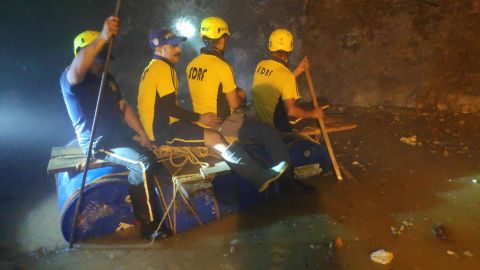
PrashantNews
The death of seven workers and the trapping of three others inside the Vishnugad-Pipalkoti Hydroelectric Project in Uttarakhand have once again raised serious concerns over the ecological and geological fragility of the Himalayas, with environmentalists repeatedly warning about the risks of large-scale hydropower development and extensive tunnelling in the region.
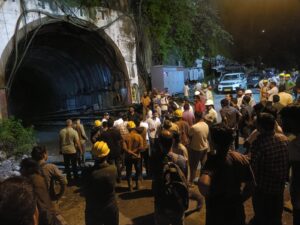
A sudden gush of water and debris, accompanied by a loud bang, hit the Tail Race Tunnel (TRT) of the 444-MW project in Chamoli district on Thursday evening, trapping 22 workers. Twelve workers were rescued and taken to nearby hospitals, while one injured worker was later discharged.
The incident occurred around 6:20 pm at Chainage 1,440 metres in Phase-II of the three-km-long tunnel. At the time, workers engaged by Hindustan Construction Company (HCC) were carrying out concrete lining work at Chainage 1,230 metres.
The project, being developed by THDC India Ltd on the Alaknanda river, is among several major hydropower projects coming up in the ecologically sensitive Himalayan region. The accident has renewed questions over the risks of extensive tunnelling and construction in mountains known for unstable geology, steep slopes and a high incidence of landslides and other natural hazards.
Environmentalists have for years cautioned that the Himalayan ecosystem is particularly vulnerable to human-induced disturbances. Large hydropower projects involve blasting, tunnelling, road construction and the excavation of massive quantities of rock and soil, potentially increasing pressure on already fragile slopes and altering local drainage patterns.
The concerns have gained urgency amid a growing incidence of extreme weather events in the Himalayan region. Critics of unrestrained hydropower development argue that individual project-level assessments may not fully capture the cumulative impact of multiple dams, tunnels, roads and other infrastructure projects being built within the same river basin.
Last year, the Garhwal Himalayas witnessed a series of disasters like Dharali that left a big trail of death and destruction.
Following Thursday’s incident, rescue operations were launched immediately in coordination with the district administration. Teams from THDCIL, HCC, the National Disaster Response Force (NDRF), State Disaster Response Force (SDRF), CISF and the district administration are working to remove water and debris and locate the three missing workers.
Senior THDCIL officials, including the Managing Director, are camping at the site and overseeing the rescue operation. The company has said that tracing the missing workers remains its highest priority and that all necessary resources are being deployed.
THDCIL has expressed condolences to the families of the deceased and assured medical treatment and all possible assistance to the injured workers and affected families.
The company said the exact cause and circumstances of the incident would be assessed in coordination with the competent authorities. However, the disaster is likely to intensify the debate over whether the ecological, geological and cumulative risks of large hydropower projects in the Himalayan region are being adequately considered before and during construction.