
 By Shishir Prashant
PrashantNews
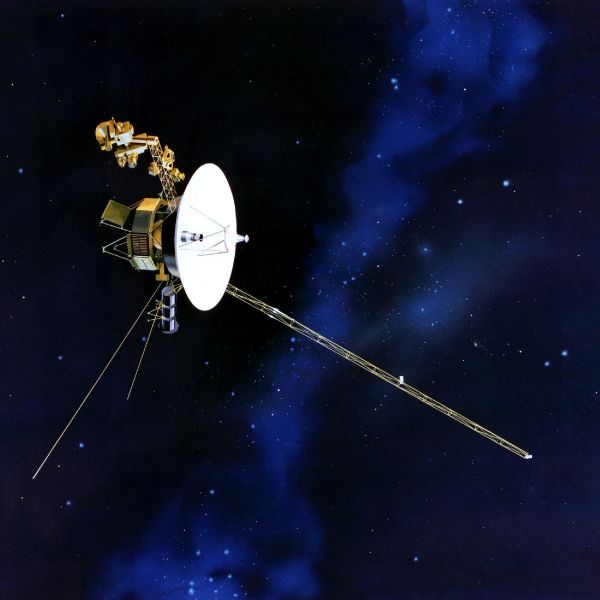
Nearly 49 years after it was launched by NASA, Voyager 1 is approaching yet another remarkable milestone in space exploration reaching a distance of one light-day from Earth on November 18 (Wednesday), 2026, meaning that a radio signal travelling at the speed of light will take 24 hours to reach it.
“No other traveler has ever journeyed so far from home. Voyager 1 is about to become the first human-made object to reach a distance of one light-day from Earth, or about 16 billion miles,” NASA said on X.
And NASA is celebrating this achievement in a unique way. “A tiny bit of light can go a long way. After sunset on Tuesday, Nov. 17, we invite you to shine bright for Voyager’s Light-Day by lighting a signal skyward, joining a worldwide celebration of this historic moment, nearly 50 years in the making,” NASA said.
Originally designed to study Jupiter and Saturn, Voyager 1 transformed our understanding of the outer solar system. During its encounters with Jupiter in 1979, it captured detailed images of the giant planet and revealed active volcanoes on its moon Io. In 1980, it sent back important observations of Saturn and its rings.
The spacecraft made history again in August 2012 when it became the first human-made object to enter interstellar space after crossing the heliopause, the boundary separating the Sun’s influence from the surrounding interstellar environment.
One of its most enduring legacies is the famous ‘Pale Blue Dot’ photograph taken in 1990, showing Earth as a tiny speck against the vast darkness of space. The image was captured from nearly six billion kilometres away following a suggestion by astronomer Carl Sagan.
Voyager 1 also carries a unique message from humanity in the form of a 12-inch gold-plated copper disc known as the Golden Record. It contains greetings in 55 languages, music, sounds of nature and photographs depicting life on Earth, intended for any extraterrestrial civilisation that might encounter it.
Despite being nearly five decades old, Voyager 1 continues to communicate with Earth. It is powered by radioisotope thermoelectric generators that convert heat from radioactive decay into electricity. As its power supply gradually declines, NASA engineers have been switching off non-essential systems to prolong its scientific mission.
Even after its instruments fall silent, Voyager 1 will continue its journey through the Milky Way, carrying a small but remarkable record of humanity into the unknown.