
 By Shishir Prashant
PrashantNews
In an economic relief package for disaster-hit Uttarakhand ahead of the 2027 Assembly elections, the Centre has substantially enhanced financial assistance under the SDRF and NDRF, doubling compensation for deaths from Rs 4 lakh to Rs 8 lakh and increasing assistance for damaged houses, crops, livestock and public infrastructure.
The enhanced assistance norms, which have come into effect from the financial year 2026-27, follow a request by Chief Minister Pushkar Singh Dhami, who has thanked Prime Minister Narendra Modi and Union Home Minister Amit Shah for the decision.
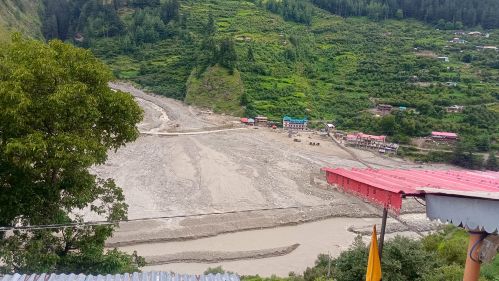
The revision covers a wide range of disaster-related losses, including human casualties, injuries, agricultural damage, livestock, fisheries, housing, cottage industries and essential public infrastructure. It is particularly significant for Uttarakhand, where floods, landslides, cloudbursts, heavy rainfall and snowfall frequently cause extensive damage to lives, livelihoods and infrastructure.
Under the revised norms, compensation for a death caused by a disaster has been doubled to Rs 8 lakh per person. The provision also covers personnel engaged in rescue and relief operations.
Assistance for permanent disability of 40-60 per cent has been increased from Rs 74,000 to Rs 94,000, while compensation for disability exceeding 60 per cent has gone up from Rs 2.50 lakh to Rs 3.20 lakh.
Financial assistance for serious injuries requiring hospitalisation for more than a week has been raised from Rs 16,000 to Rs 20,500. For injuries requiring hospitalisation for less than a week, the amount has increased from Rs 5,400 to Rs 7,000.
Assistance for loss of clothing and household articles has been doubled from Rs 2,500 to Rs 5,000 per family in each category.
The revised norms provide higher input subsidies to farmers whose crops are damaged by natural disasters.
For rain-fed crops, assistance has been increased from Rs 8,500 to Rs 11,000 per hectare, while the amount for crops under assured irrigation has gone up from Rs 17,000 to Rs 22,000 per hectare. For perennial and horticultural crops, the assistance has been raised from Rs 22,500 to Rs 30,000 per hectare.
The maximum eligible area remains two hectares. The minimum assistance has also been increased in these categories.
Assistance for removing deposits of silt and sand exceeding three inches on agricultural land has been raised from Rs 18,000 to Rs 23,000 per hectare. For permanent land damage caused by landslides and avalanches, the assistance has increased from Rs 47,000 to Rs 60,000 per hectare.
Livestock owners will also receive higher assistance. Compensation for the loss of large animals such as cows, buffaloes, camels and yaks has been increased from Rs 37,500 to Rs 50,000 per animal, subject to a maximum of three animals per family. For smaller animals, including sheep, goats and pigs, the assistance has gone up from Rs 4,000 to Rs 5,100 per animal.
Assistance for poultry losses has been increased from Rs 100 to Rs 130 per bird. The daily assistance for fodder in animal camps has also been enhanced from Rs 80 to Rs 100 for large animals and from Rs 45 to Rs 60 for small animals.
The fisheries sector will receive higher assistance for damaged boats and fishing nets. Assistance for repairing a damaged boat has been raised from Rs 6,000 to Rs 8,000, while support for purchasing a new boat has increased from Rs 15,000 to Rs 19,000. Assistance for repairing fishing nets has gone up from Rs 3,000 to Rs 4,000 and for new nets from Rs 4,000 to Rs 5,100.
The revised norms also provide increased assistance for families whose houses are destroyed or damaged in disasters.
For a completely destroyed house, assistance in plain areas has been increased from Rs 1.20 lakh to Rs 1.60 lakh. In hilly and inaccessible areas, the amount has gone up from Rs 1.30 lakh to Rs 1.70 lakh.
For partially damaged pucca houses, the assistance has been raised from Rs 6,500 to Rs 8,500, while for kutcha houses it has increased from Rs 4,000 to Rs 5,500.
Assistance for completely destroyed huts has been increased from Rs 8,000 to Rs 10,500 and for damaged cattle sheds from Rs 3,000 to Rs 4,000.
Artisans engaged in handicrafts and handloom activities will also receive increased assistance for replacing tools and raw materials, with the amount in each category rising from Rs 5,000 to Rs 6,500.
The Centre has also enhanced assistance for the immediate restoration of public infrastructure damaged by disasters, including roads, bridges, drinking water schemes, minor irrigation works, electricity supply systems, schools, health centres and community assets.
For repairing state highways, major district roads and other major roads, assistance has been increased from Rs 1 lakh to Rs 1.30 lakh per kilometre in plain areas and from Rs 1.25 lakh to Rs 1.60 lakh in hilly areas.
For rural and village roads, including culverts, the assistance has gone up from Rs 60,000 to Rs 80,000 per kilometre in plain areas and from Rs 75,000 to Rs 1 lakh per kilometre in hilly areas.
Assistance for the immediate restoration of damaged drinking water schemes has been raised from Rs 2 lakh to Rs 2.60 lakh per scheme. The same enhanced ceiling applies to eligible minor irrigation works.
In the electricity sector, assistance for replacing damaged power poles has been increased from Rs 5,000 to Rs 6,500 per pole. Support for repairing damaged low-tension lines has gone up from Rs 50,000 to Rs 70,000 per kilometre, while assistance for replacing damaged distribution transformers has increased from Rs 1 lakh to Rs 1.30 lakh.
For damaged school buildings, the assistance has been raised from Rs 2 lakh to Rs 2.60 lakh per building. The same increase applies to primary and community health centres. Assistance for damaged panchayat and community assets has been enhanced from Rs 2.50 lakh to Rs 3.20 lakh per unit.
The government has clarified that search and rescue operations will continue to be supported on the basis of actual expenditure, including the cost of boats, helicopters and other logistical requirements.
Chief Minister Dhami said the enhanced norms would provide greater financial support to disaster-affected families and accelerate relief and rehabilitation work in the state.
Disaster Management and Rehabilitation Minister Madan Kaushik also welcomed the decision, saying farmers, livestock owners, fishermen, artisans and families affected by natural disasters would benefit from the revised provisions.
Secretary, Disaster Management and Rehabilitation, Vinod Kumar Suman, said the revised norms had become effective for 2026-27 and that necessary instructions would be issued to departments and district administrations to ensure that the enhanced assistance reached affected people in a timely and transparent manner.