
 By Shishir Prashant
PrashantNews
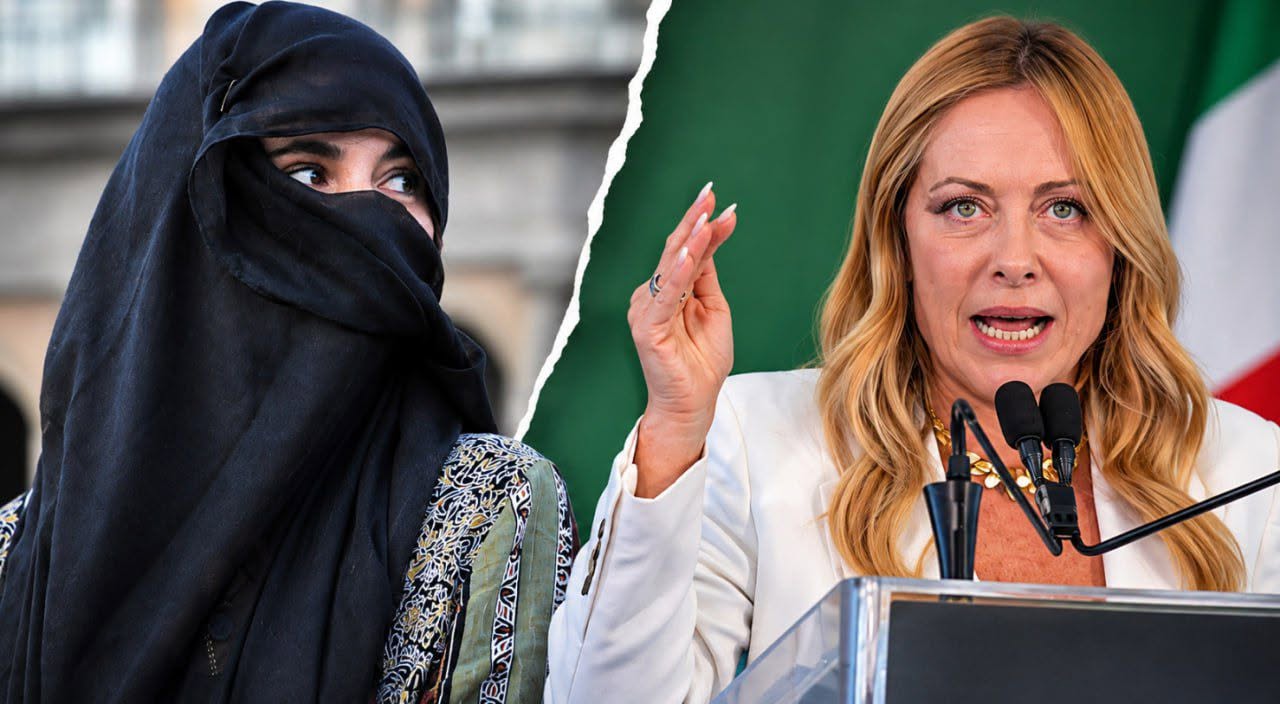
Italy’s parliament has given final approval to a controversial education reform banning students from wearing face-covering garments, including burqas and niqabs, during school activities. The legislation, introduced by Prime Minister Giorgia Meloni’s government, has triggered a debate over religious freedom, integration and discrimination.
The Chamber of Deputies, the lower house of parliament, approved the legislation on November 26 by 142 votes in favour and 112 against, with four abstentions. The Senate had already cleared the measure on November 20, completing its passage through parliament.
Under the new rules, students will not be allowed to participate in curricular and extracurricular school activities with their faces covered in a manner that prevents identification. The restrictions will particularly affect Muslim women and girls who wear burqas and niqabs.
However, the ban does not extend to the traditional Islamic hijab, which covers the head and neck but leaves the face visible.
Violations can attract administrative fines ranging from 200 euros to 1,000 euros (approximately Rs 20,000 to Rs 1.02 lakh). In cases involving minors, the penalty will be imposed on their parents or legal guardians. Exemptions are allowed on specified medical and educational grounds.
The legislation is part of a wider education reform aimed at promoting the integration of foreign students into Italy’s education system. It also introduces a 30 per cent cap on students of foreign origin in first-year classrooms from the 2027-28 academic year, subject to exemptions for students with adequate Italian language proficiency.
The government has defended the measures as necessary to promote integration and ensure that students can be identified in educational institutions.
However, opposition parties have strongly criticised the reform, accusing the government of targeting foreign and Muslim communities rather than addressing the actual challenges confronting the country’s education system.
During the parliamentary vote, opposition lawmakers displayed placards carrying the message, “At school nobody is a foreigner”.
The legislation marks another significant development in Europe’s continuing debate over religious symbols, secularism and the integration of immigrant communities.