
 By Shishir Prashant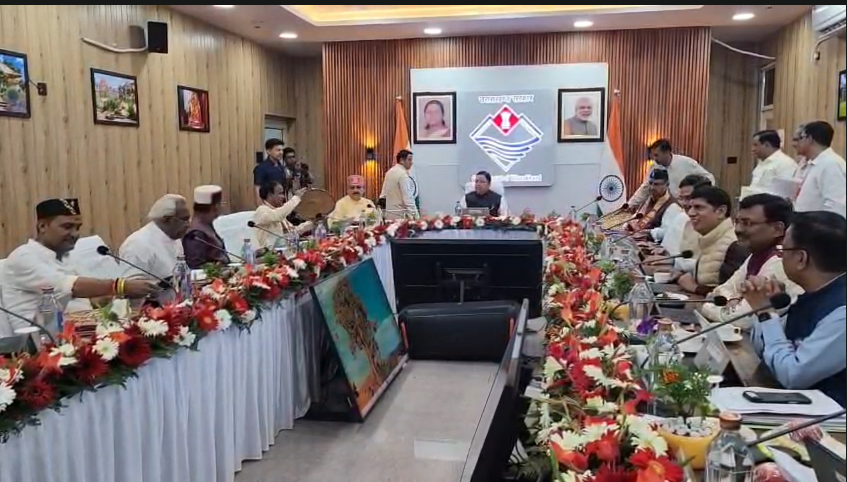
PrashantNews
A 153-year-old British-era irrigation law is set to become history after the Uttarakhand Cabinet on Sunday decided to replace it with a new legislation in the hill state.
The Cabinet which met at Banbasa in Champawat district on Sunday decided to repeal the Northern India Canal and Drainage Act, 1873, a British-era law governing irrigation and drainage, and cleared a new legislation tailored to the state’s geographical and water-management needs. Champawat bordering Nepal is being represented by Chief Minister Pushkar Singh Dhami in the state assembly.
The Cabinet approved the proposal to introduce the Uttarakhand Irrigation and Drainage Bill, 2026 in the state Assembly in place of the British irrigation law. The government said the existing legislation had become outdated and inadequate in view of the state’s distinct geographical conditions.
The move was among several important decisions taken at the Cabinet meeting, which Dhami described as part of an initiative to take the state’s governance beyond Dehradun and closer to people living in remote and border areas.
Dhami said Cabinet meetings would henceforth also be held in different districts so that local problems, development potential and regional priorities could be brought directly before the government. The objective, he said, was to reduce the distance between the government and people and ensure that development benefits reached the state’s farthest areas.
The Cabinet also approved amendments to the policy and norms governing the establishment of private universities in Uttarakhand. Under the revised provisions, private universities in the hills will require a minimum 2,500 sq metres of built-up area, while those in the plains will require 20,000 sq metres. Separate evaluation criteria will also be prescribed to ensure quality in proposals for setting up private universities.
Another decision concerned the shortage of medical staff in government medical colleges. The Cabinet approved revision of the pay/honorarium payable to Senior Residents, Junior Residents and Demonstrators, with the stated objective of addressing the shortage of personnel in these categories.
The Banbasa meeting also carried a strong cultural and border-region theme. Dhami and members of his Cabinet were presented with the traditional ‘Farra/Chhantoli’, an emblematic shield associated with the famous Bagwal tradition of Devidhura in Champawat.
The traditional shield is made mainly from bamboo or ringal strips and has an umbrella-like form. Its presentation to the Chief Minister and ministers was described as a recognition of Uttarakhand’s folk traditions and the distinctive cultural identity of the border district.
Dhami said the state’s frontier areas were not merely geographical boundaries but important links in the country’s security, culture and development. He said the government was focusing on strengthening infrastructure, employment, tourism and connectivity in these areas.
The Banbasa Cabinet meeting thus combined a significant legislative move to replace a 153-year-old irrigation law with decisions on higher education and medical staffing, while signalling the government’s intention to take the functioning of the state government to different parts of Uttarakhand.