
 By Shishir Prashant
PrashantNews
For Binita Shah, farming has never been merely about growing crops. It has been a lifelong engagement with nature, traditional agriculture and the people who depend on the land. After spending more than two decades working with farmers and promoting organic agriculture, she is now on a mission to bring the forgotten food traditions of the Himalayas to a wider audience.
Handpicked by former Uttarakhand chief secretary Dr R.S. Tolia, Binita headed the Uttarakhand Organic Commodity Board from 2003 to 2015. Her experience spans social forestry, dairy farming, organic crop production, biodynamic agriculture, farmer training and crop demonstrations.
Her latest initiative, Thaur – The Doon Haat at Mianwala in Dehradun, is an attempt to bring the rich food and agricultural heritage of the Himalayas under one roof. It is not just a marketplace for mountain produce but a platform for preserving traditional recipes, indigenous seeds and the culinary knowledge of remote Himalayan communities.
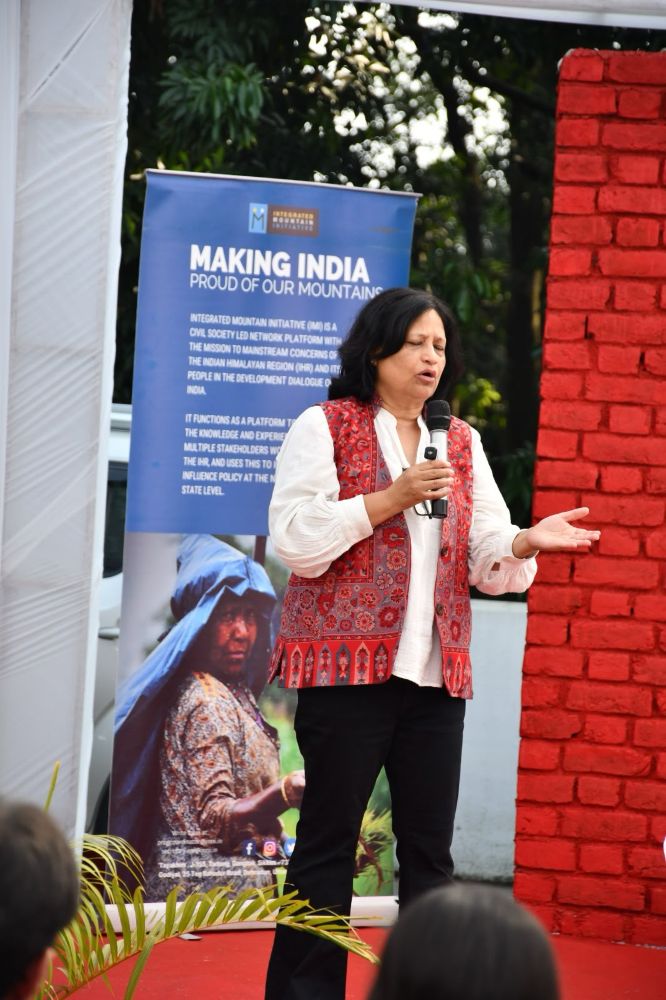
A two-day Himalayan Food and Seed Festival held at the Haat on November 14-15, was organized to give boost to the mountain food. The festival brought together farmers, seed conservators and food enthusiasts from Uttarakhand’s Niti valley, Himachal Pradesh’s Spiti valley and Sikkim’s Dzongu valley.
A buckwheat dosa, steaming red rice and nettle khichdi, sattu halwa prepared with pahadi ghee and traditional Spiti delicacies offered visitors a delicious introduction to mountain kitchens. Farmers themselves demonstrated the preparation of these dishes, sharing recipes passed down through generations.
“We are trying our best to conserve the different foods and their recipes, especially those from the remote areas of the Himalayas in Uttarakhand,” said Binita.
The festival also showcased more than 1,000 varieties of seeds of grains, pulses and vegetables, including naked barley, buckwheat, red rice, mandua and amaranth. Farmers exchanged indigenous seeds and discussed ways to protect them from disappearing.
A major attraction was the launch of THYME (Trans-Himalayan Mountain Agro-Ecology), a brand initiative to give traditional Himalayan food products a distinct identity and connect them with wider markets.
Experts highlighted the nutritional benefits of traditional grains and the need to make their cultivation economically rewarding for farmers. Former chief secretary N.S. Napalchyal stressed that promoting Himalayan food diversity could strengthen nutrition and the mountain economy.
Around 200 farmers, students and consumers participated in the festival.
For Binita, however, the larger challenge goes beyond organising food festivals. It is about ensuring that the recipes, seeds and farming traditions preserved by generations of mountain communities do not disappear in the rush towards modern food habits.
Through Thaur, she hopes to bring these forgotten Himalayan flavours back to everyday kitchens.