 By Shishir Prashant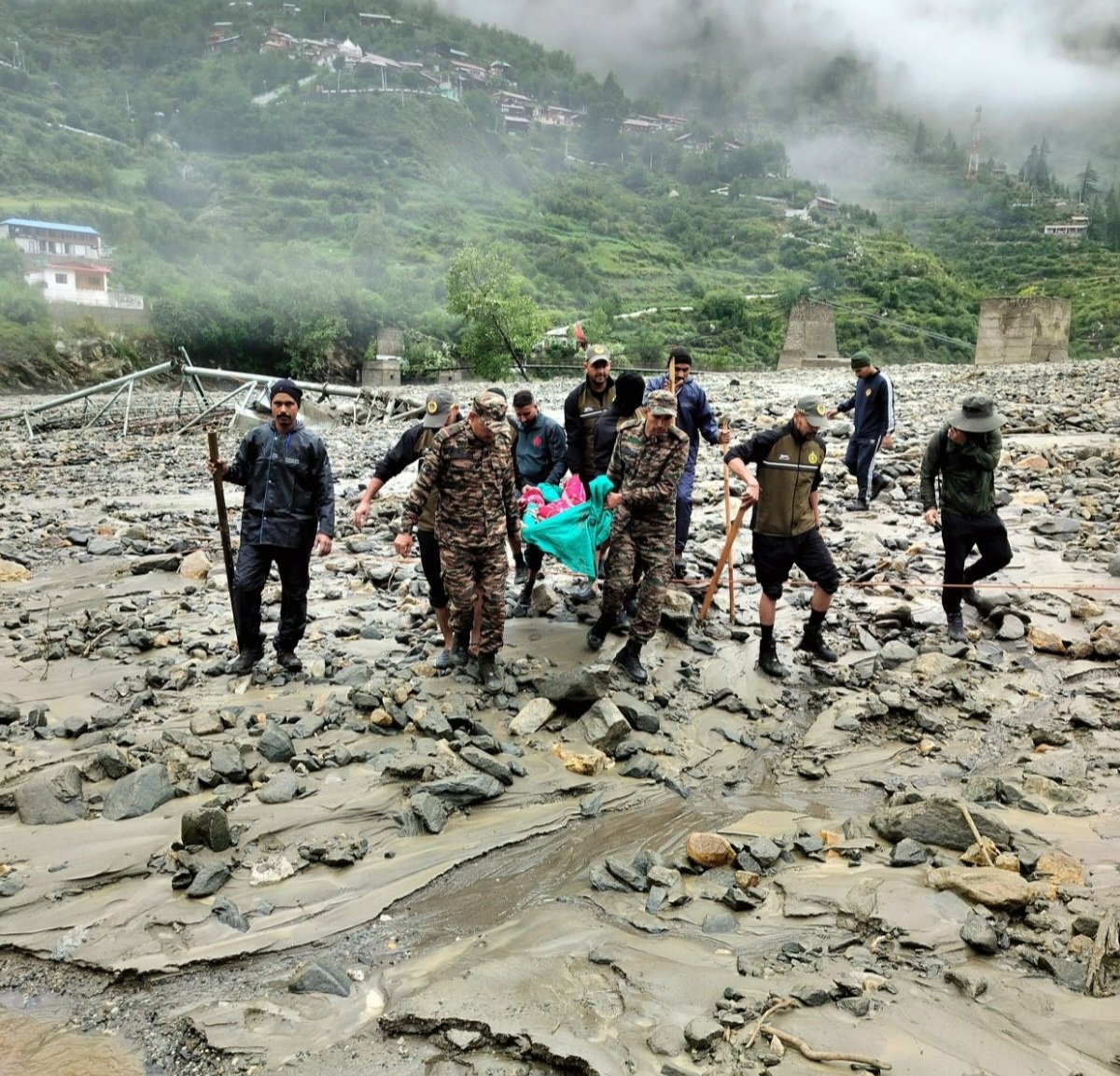
PrashantNews
The day is not far when the entire state of Himachal Pradesh may vanish, observed the Supreme Court on August 1.
In less than a week, calamitous floods struck Dharali in the neighbouring Uttarakhand where frequent disasters like landslides and floods also wreak havoc just like in Himachal. But the disasters like Kedarnath were unprecedented.
Uttarakhand’s name has now become virtually synonymous with disasters. It is a disaster-prone state where the highly fragile Himalayan hills are literally crying for help against the rampant unplanned developments.
Despite the repeated disasters that have taken a very heavy toll in the hill state, the successive governments are in no mood to tackle the issues of climate change and environmental degradation in the Himalayas.
In the name of development, thousands of trees are being felled which badly harm the sensitive eco-system of the Himalayan belt. Glacial Lake outbursts and cloudbursts become common in such zones.
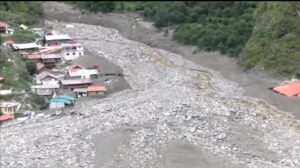
Remember, all those big hotels and buildings which were flattened in the Dharali market area were constructed in gross violation of the eco-sensitive zone norms. Few years ago, there were only very few hotels and dhabas. In the past couple of years, scores of hotels and buildings mushroomed in the market area built mostly on the Khirgard nullah which brought heavy floods from the nearby hills to wipe out much of Dharali.
Dharali is not the first disaster that has struck very hard. In fact during every monsoon season, rains wreak havoc in the hill state causing widespread floods and landslides that keep the state administration on the tenterhook. Besides, incidents of land subsidence, earthquakes and forest fires also cause lots of damage in the state.
Two major disasters in the past 12 years – Kedarnath in 2013 and Rishiganga in 2021 were the glaring examples of the destruction. In Kedarnath, over 5000 people were killed in June 2013.
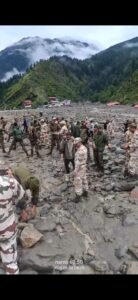
After Kedarnath and Rishiganga, it is now Dharali where everything changed within seconds on Tuesday afternoon. Even as the rescue operation was speeded up, there is very little hope that scores of people who went missing will ever be found alive as more than one full day has already been lost.
Every time the Met office declares a red or an orange alert in the hill state, a worried Chief Minister Pushkar Singh Dhami is seen instructing the top government officials to remain in alert mode. But even alertness hardly works when the disasters like Dharali occurred.
Interestingly, a couple of disaster occurred during the non-monsoon season. For example, the Rishiganga deluge struck in parts of Chamoli district In February 2021 also took a heavy toll. Many scientists have expressed fear that a big earthquake of more than 7-8 magnitude may strike in Uttarakhand any time. A portion of the Silkayara tunnel caved in in November 2023. Later all the trapped workers came out alive.
Despite all these disasters, the government has not taken long term measures to mitigate the sufferings of the people from these disasters. When the land subsidence issue came to the fore in Joshimath, a section of residents in this religious town had expressed concern over NTPC’s 520 Mw Tapovan Vishnugaad hyel project alleging an underground head race tunnel near the highly seismic and fragile town have caused wide-spread cracks in the town. On previous occasions, the residents had alleged excessive water discharge from the head race tunnel.
But instead of going to the bottom of the issue, NTPC launched a campaign saying its 12 kms long underground tunnel has played no role in the land subsidence. Various reports of the committees of scientists set up by the government to look into the matter made no observation on this underground tunnel of NTPC.
Scientists believe the Joshimath land subsidence has occurred due to unplanned infrastructure, lack of adequate drainage and excavation of roads through unstable debris slopes are some of the reasons that have accelerated the ongoing slope instability and land subsidence.
There had been incidents in the state where thousands of trees were felled in the name of development or illegally for wooden sleepers. Two years ago, smugglers colluding with forest officials felled thousands of trees in Chakrata-Tons areas in Dehradun district. The rampant cutting of trees is also causing environmental degradation in the state.
The government has felled nearly 50,000 trees in the name of the construction of the all weather chardham highway project. According to an estimate, when one tree is cut actually it harms three more trees.
Even on the Chardham all weather highways, the state experts are unhappy with the road widening methods.
Pahalgam in Kashmir is one place where there is a blanket ban on construction activities. The state government should adopt a similar approach to safeguard the Himalayan belt. Be it Himachal or Uttarakhand, we have to take tough measures to safeguard the Himalayas.
In the past, the Uttarakhand High Court has also stopped haphazard mining of minerals like soap stones in some areas in Bageshwar following concerns expressed by villagers that it was causing widespread cracks in nearby villages.
In yet another move, the Supreme Court has decided to set up an expert committee to assess the carrying capacity of the hill stations in Uttarakhand and other Himalayan states in terms of its ecology.
Such measures are the need of the hour.
The emphasis should be on the importance of the sustainable development in order to maintain a balance between the Himalayan ecology and the planning. Ends