
 By Shishir Prashant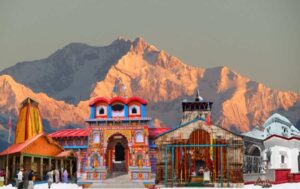
PrashantNews
Tirath-purohits (priests) in Uttarakhand are not too sure whether non-Hindus visit the Chardham shrines comprising Badrinath, Kedarnath, Gangotri and Yamunotri in the Garhwal Himalayas.
But the temple authorities have decided that the entry to Badrinath, Kedarnath, and Gangotri will now be prohibited for non-Hindus.
However, the Yamunotri temple committee, one of the four Char Dham temples, is yet to make a decision on the issue, the temple sources said.
After consulting the stakeholders, the Badrinath Kedarnath Temple Committee said it has decided to ban the entry of non-Hindus in the two high altitude shrines. Similarly, the Gangotri Temple Committee has also followed suit.
But the temple sources and tirath-purohits said they were not too sure whether non-Hindus visit these Chardham shrines or not.
The Badrinath Kedarnath Temple Committee said a consensus has been reached with all stakeholders, including sadhus, priests, and local people, on the issue of prohibiting the entry of non-Hindus into the temple areas. The proposal will be formally approved at the temple committee’s board meeting later this week, a committee official said.
The official pointed out that the system of restricting the entry of non-Hindus is already in place since the time of Adi Shankaracharya. However, the decision was never formalized by the temple committee.
Recently, the Ganga Sabha, the organization managing Har Ki Pauri and the surrounding ghats in Haridwar, has demanded that the entry of non-Hindus be prohibited at all Ganga ghats and religious places in the Kumbh area before the proposed Ardh Kumbh next year.
The Ganga Sabha, citing the Haridwar Municipal Act of 1916, has also put up “Non-Hindu Prohibition Zone” boards in the area around Har Ki Pauri.
Meanwhile, former chief minister Harish Rawat said the BJP government is doing such things to divert attention from public issues like growing unemployment and migration. “The government should decide where it wants to impose restrictions. It should impose them all at once. By doing this repeatedly, it wants to confuse people and divert attention from public problems like growing unemployment and migration,” Rawat said.