
 By Shishir Prashant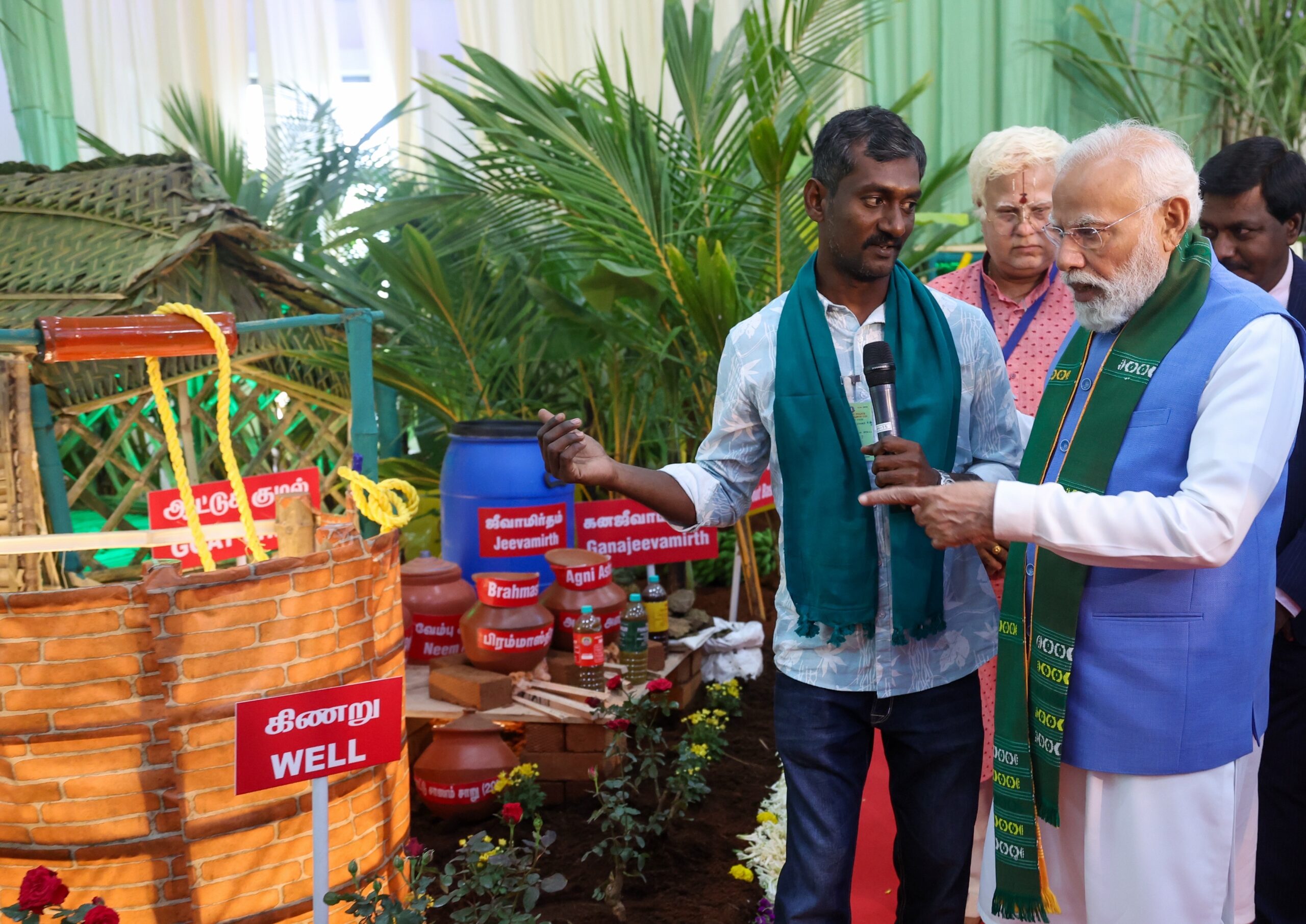
PrashantNews
With the demand of organic products on the rise globally, youths in India are now getting attracted to natural farming with some of them earning Rs 2 lakh per month.
During an interaction with Prime Minister Narendra Modi at the South India Natural Farming Summit 2025 in Coimbatore, Tamil Nadu on Wednesday, some farmers explained that earlier such individuals were considered eccentric, but now they are earning ₹2 lakh per month, and are seen as an inspiration.
A farmer shared that they have trained 7,000 farmers at their model farm under a natural farming scheme, along with 3,000 college students. The Prime Minister asked if they have access to a market. The farmer responded that they directly market and export to other countries, and also undertake value addition through products like hair oil, copra, and soaps.
The farmer confirmed that a large number of youths are actively participating. The Prime Minister remarked that such highly educated individuals, including PhD holders, might initially struggle to understand the value of this work, but once they see the benefits, they begin to appreciate it.
Farmers also said moringa or drumstick (sehjan) is in high demand these days in the US, Africa, Japan and some southeast Asian nations. Modi inquired about the use of moringa leaves to which the farmer explained that Moringa leaves are processed into powder and exported.
The Prime Minister noted that Moringa powder is in high demand these days, and the farmer affirmed this. Modi further inquired which countries primarily import the product. The farmer responded that major markets include the United States of America, African countries, Japan, and parts of Southeast Asia.
A female farmer explained that there are four varieties of tea—black tea, white tea, oolong tea, and green tea. She elaborated that oolong tea is 40% fermented. Prime Minister Modi remarked that white tea has a significant market these days, to which the farmer agreed. The farmers also displayed a variety of vegetables and fruits like brinjal, mango grown through natural farming across seasons.
The farmer then informed that the entire display comprised GI products from Tamil Nadu, with 25 items showcased, including Kumbakonam’s betel leaves and Madurai’s jasmine. Modi asked about the market reach, to which the farmer responded that these products are available across India and are prominently featured during every function day in Tamil Nadu. The Prime Minister asked whether people from Varanasi also sources the betel leaves to which the farmer confirmed affirmatively.
Modi asked about the increase in production to which the farmer responded that they currently have over 100 products, with honey being a key item. The Prime Minister inquired about the market potential, and the farmer affirmed that demand is very high, with their honey products reaching global markets.
The Prime Minister was further informed that they have nearly a thousand traditional paddy varieties, with nutritional value comparable to millets. Shri Modi remarked that the work done by Tamil Nadu in the field of paddy remains unmatched globally. The farmer agreed and affirmed the statement, adding that all paddy, rice, and related value-added products being exported have been displayed at the venue.
Modi shared that during his tenure in Gujarat, he had developed the concept of a “cattle hostel.” He explained that by housing all village cattle in a common facility, the village remains clean, and the system requires just one doctor and four to five support staff for effective maintenance. The farmer agreed and added that the setup supports mass production of jeevamrit, which is then supplied to nearby farmers.