
 By Shishir Prashant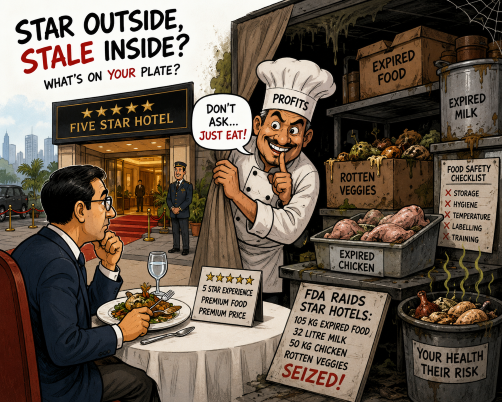
PrashantNews
Five-star hotels in India were once synonymous with quality, hygiene and safe food. A food-safety crackdown in Bengaluru has put that assumption under serious question.
The seizure of 105 kg of expired food, 32 litres of expired milk, 50 kg of chicken and large quantities of rotten or fungus-affected vegetables from star hotels in Bengaluru is far more serious than a routine food-safety violation. It raises fundamental questions about hygiene, accountability and the assumption that expensive restaurants and luxury hotels automatically provide safer food.
The Karnataka Food Safety and Drug Administration’s inspections of 26 three-star and five-star hotels reportedly uncovered expired meat, fish, milk and bakery products, fungal growth on vegetables, unhygienic storage and improper segregation of vegetarian and non-vegetarian food. Officials also found violations of food-labelling requirements.
The quantities are particularly disturbing. At Radisson Blu, officials reportedly seized 105 kg of expired food, including 50 kg of chicken, 25 kg of meat and 23 kg of fish. At The Lalit Ashok, 32 litres of expired milk and substantial quantities of meat and vegetables were destroyed. Other premium hotels also faced seizures.
The bigger issue is not simply that food had crossed its expiry date. It is why such food was still inside professional commercial kitchens. Large hotels generally have procurement departments, inventory systems, refrigeration facilities, trained kitchen staff and established food-safety protocols. If expired food can remain in storage despite these systems, regulators and hotel management need to examine whether safety checks are actually being followed or merely documented.
There is also a serious public-health dimension. Spoiled meat, expired dairy products and fungus-affected vegetables can create risks of foodborne illness. The danger becomes greater when contaminated ingredients enter large-scale kitchens serving hundreds of customers, including children, elderly people and visitors unfamiliar with the establishment.
The episode also challenges the perception that food safety is primarily a problem of small eateries and street vendors. Regulatory attention must extend across the entire food-service industry. A five-star kitchen cannot receive softer scrutiny simply because its dining room is luxurious.
However, raids should not end with seizure and destruction of food. Authorities must ensure laboratory testing, penalties where violations are established, follow-up inspections and transparent disclosure of corrective action. Karnataka has previously identified food-safety concerns across a much wider range of establishments, showing that the problem requires sustained enforcement rather than occasional drives.
The Bengaluru raids should therefore be treated as a systemic warning. Food safety is not a luxury amenity. Whether a customer pays ₹100 or ₹10,000 for a meal, the basic right remains the same: the food served must be safe, fresh and fit for consumption.