
 By Shishir Prashant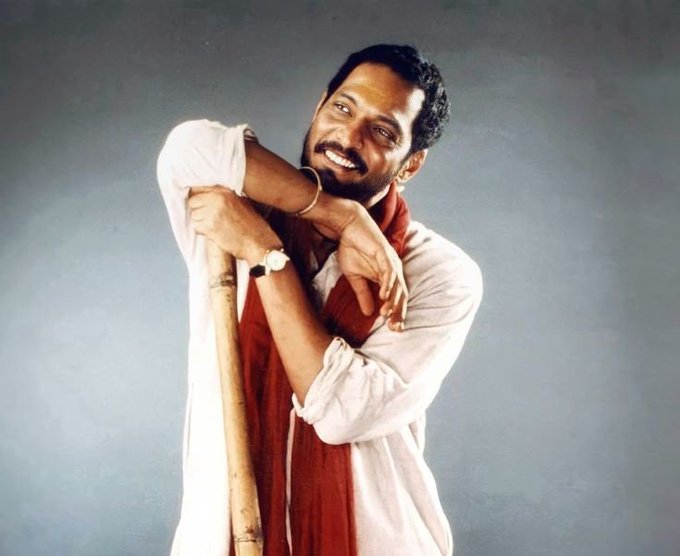
PrashantNews
Veteran actor Nana Patekar, whose intense performances, distinctive voice and explosive dialogue delivery made him one of the most recognisable faces of Indian cinema, died on Thursday at the age of 75 after suffering a cardiac arrest at his residence in Goa.
Patekar was found unconscious at his home in Dona Paula and was taken to Manipal Hospital. Doctors attempted to revive him with CPR for about 45 minutes but could not save him. He was declared dead at around 5:20 am. A medico-legal case has been registered and a post-mortem is being conducted.
His death brings to an end a career spanning nearly five decades in Hindi and Marathi cinema — a career in which he played gangsters, policemen, soldiers, fathers, politicians and comic characters with equal conviction. In recent years, the iconic meme featuring Patekar holding a cup of tea and laughing hysterically from the blockbuster comedy film Welcome (2007) made him a social media hero.
Born Vishwanath Patekar on January 1, 1951, in Murud, Maharashtra, he began his career in Marathi theatre before making his film debut with Gaman in 1978. He came into prominence with films such as Ankush and Salaam Bombay!, but it was Vidhu Vinod Chopra’s Parinda (1989) that firmly established him as a major actor. His portrayal of the ruthless gangster Anna earned him the National Film Award for Best Supporting Actor.
Patekar turned director with Prahaar: The Final Attack in 1991, in which he also played an Indian Army officer. He underwent military training for the role, bringing considerable authenticity to the film.
In Angaar (1992), he played a gangster and won his first Filmfare Award for Best Villain. The same year he appeared with Shah Rukh Khan, Juhi Chawla and Amrita Singh in Raju Ban Gaya Gentleman. He starred alongside Raaj Kumar in Tirangaa (1993), earning another Filmfare nomination for Best Supporting Actor. Then came Krantiveer (1994), the performance that turned Patekar into a leading man. Playing a disillusioned and unemployed man who finds a new purpose, he won the National Film Award for Best Actor, the Filmfare Award for Best Actor and the Screen Award for Best Actor.
His performance also produced some of the most memorable dialogue sequences in Hindi cinema. In Abhay (1994), he played a ghost in a children’s film, before appearing with Rishi Kapoor in Hum Dono (1995). In Agni Sakshi (1996), he played a sadistic husband and won his second National Film Award, this time for Best Supporting Actor. The same year, he played a deaf father in Khamoshi: The Musical, opposite Manisha Koirala. He went on to play a gangster in Ghulam-E-Mustafa (1997), an honest but maverick police officer in Yeshwant (1997) and a schizophrenic in Wajood (1998).
In Kohram (1999), he starred opposite Amitabh Bachchan as an undercover Army intelligence officer pursuing Bachchan’s character. His other notable films of the decade included Yugpurush and Hu Tu Tu.
Patekar had a rare ability to turn a line of dialogue into a character-defining moment. His voice could be menacing, angry, sarcastic, vulnerable or comic — often within the same film.
One of his most remembered lines came in Yeshwant: “Ek machhar saala aadmi ko hijda bana deta hai.” The line became part of popular culture, remembered as much for Patekar’s delivery as for the words themselves.
Krantiveer gave him several other unforgettable moments, including: “Aa gaye meri maut ka tamasha dekhne.” And another lines from the film bluntly questioned communal divisions: Saale khud ke desh mein ek sui nahin bana sakte … aur hamara desh todne ka sapna dekhte hain.. “Bata, ismein Musalman ka khoon kaunsa aur Hindu ka kaunsa?”
These lines were not merely delivered; Patekar appeared to inhabit them, using pauses, facial expressions and changes in pitch to give them extraordinary force. Recent tributes following his death have once again brought his Krantiveer monologues into public discussion.
His dialogue delivery was equally effective in Parinda, where his gangster character’s cold worldview produced lines such as: “Dhande mein koi kisi ka bhai nahi, koi kisi ka beta nahi.”
And years later, he demonstrated an entirely different side of his personality as Uday Shetty in Welcome (2007), where his deadpan delivery and short temper turned him into one of Hindi cinema’s most memorable comic gangsters.
Patekar’s ability to reinvent himself continued through the 2000s. His performance as encounter specialist Sadhu Agashe in Ab Tak Chhappan (2004) brought a restrained intensity to the role, while Apaharan (2005) showcased another morally complex character.
Then came Uday Shetty in Welcome, alongside Anil Kapoor’s Majnu Bhai. The role introduced Patekar’s comic timing to a new generation and demonstrated that the actor who could dominate a dramatic scene could also generate laughter simply through a pause, a look or the way he delivered a sentence.
In Marathi cinema, he delivered another landmark performance in Natsamrat (2016), playing a retired stage actor whose life begins to unravel after leaving the theatre.
Patekar was also known for his association with the Territorial Army and his social work. He co-founded the NAAM Foundation with actor Makarand Anaspure to support farmers and drought-hit communities in Maharashtra.
He was awarded the Padma Shri in 2013 for his contribution to cinema and the arts.
Over nearly five decades, Patekar built a filmography that was unusually diverse. He could play a terrifying gangster in Parinda, a revolutionary in Krantiveer, a tough policeman in Yeshwant, a morally conflicted officer in Ab Tak Chhappan and a comic don in Welcome.
But perhaps the most enduring memory will be his voice. A voice that did not simply deliver dialogue — it owned it. And in Indian cinema, very few actors made words sound quite like Nana Patekar did.
Personal life:
Away from the screen, Patekar’s life was marked by considerable personal loss and relationships that he largely kept away from the public eye.
He married Neelkanti Patekar in 1978, after the two met during their theatre days. The couple had two sons, Durvasa and Malhar. Their elder son Durvasa died at the age of about two-and-a-half after suffering from health problems from birth. Patekar later spoke candidly about the loss, recalling how his son had taught him important lessons during his short life.
Patekar’s father also died of a heart attack when the actor was just 28. In an interview, he recalled the financial hardships his family had faced after his father lost his property and said he began working at the age of 13 to help support the family. He later described his father’s death as something he remembered every day.
His marriage to Neelkanti eventually became a relationship lived largely apart. The couple reportedly remained legally married but lived separately for about 35 years. Patekar had attributed the separation to differences in their personalities and ways of thinking, while continuing to speak respectfully of his wife and acknowledge the role she played in his early life.
His personal life also attracted considerable media attention in the 1990s because of his reported relationship with actress Manisha Koirala. The two worked together in Khamoshi: The Musical, Agni Sakshi and Yugpurush, and their closeness led to widespread reports of a romantic relationship. Koirala later acknowledged that they had been in a relationship, while accounts of the period also described tensions surrounding their relationship. Patekar was also romantically linked in media reports to actress Ayesha Jhulka after his relationship with Koirala.
Despite the attention surrounding his relationships, Patekar generally maintained a private life. His personal story was one of considerable hardship — poverty in his youth, the early death of his father, the loss of a young son and a decades-long separation from his wife — experiences that, in different ways, became part of the emotional depth audiences saw in his performances.