
 By Shishir Prashant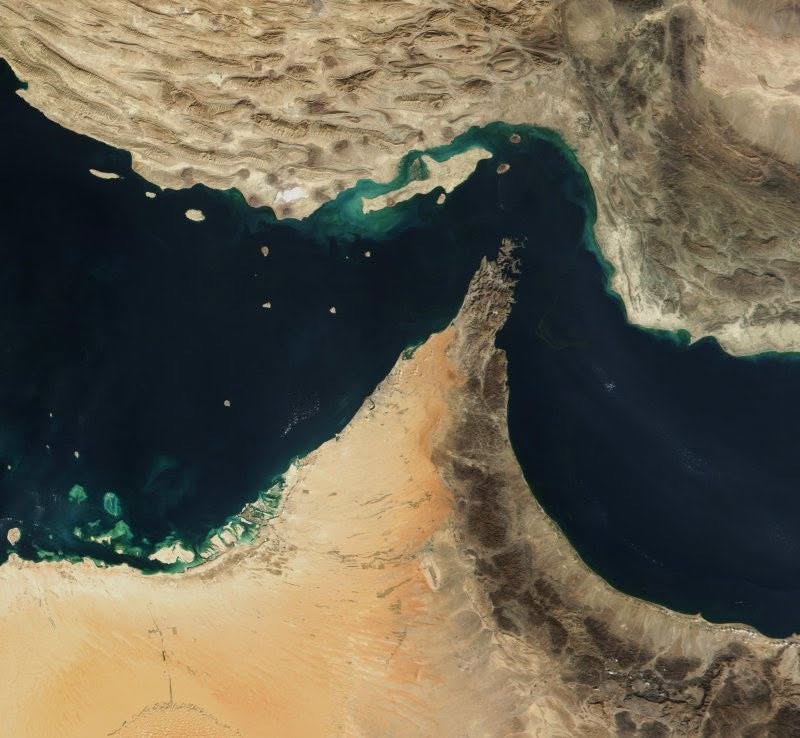
PrashantNews
US President Donald Trump has said Washington intends to retain control of the strategically vital Strait of Hormuz after what he described as the “defeat” of Iran, escalating an already tense confrontation over one of the world’s most important energy corridors.
Speaking in New York on Friday, Trump said that after the US finishes defeating Iran, he would “pretty soon” declare the Strait of Hormuz a US territory. The remarks came days after he claimed that the US had “total control” of the waterway and suggested that Washington would keep that control.
The comments immediately drew a sharp response from Tehran. Iranian officials rejected Trump’s claim of US control and insisted that the waterway would remain under Iranian control. Iran’s deputy foreign minister Kazem Gharibabadi said the strait could not simply be claimed by another country.
Trump’s proposal would have major international implications. The Strait of Hormuz lies between Iran and Oman and connects the Persian Gulf with the Gulf of Oman and the Arabian Sea. Under international maritime law, coastal states exercise sovereignty over their territorial seas, while navigation through international straits is governed by specific rules on passage. The waterway is not US territory.
The strait is also crucial to the global economy. About 20 million barrels of oil a day passed through Hormuz in 2024, equivalent to roughly one-fifth of global petroleum liquids consumption. More than one-fifth of global liquefied natural gas trade also moved through the waterway.
The dispute has intensified as the US-Iran conflict has disrupted shipping through the strait. Trump has defended the US military presence and blockade, while Tehran has maintained that it controls access to the waterway. Shipping traffic has fallen sharply amid attacks, threats and heightened insurance risks.
Trump’s latest remarks therefore go beyond his earlier claim of military control, signalling a possible US ambition to maintain a long-term strategic presence over the waterway even after the conflict ends. “Such a move would almost certainly face opposition from Iran and raise broader questions among Gulf states and other major trading nations whose energy supplies depend on free passage through Hormuz,” a defence expert said.
The United Nations has previously called for the restoration of full freedom of navigation through the strait and urged the United States and Iran to resolve their differences through diplomacy, warning that renewed full-scale hostilities could have catastrophic consequences for regional and global economic stability.
For now, Trump’s declaration remains a political statement rather than an established change in the legal status of the strait. But it marks a significant escalation in Washington’s rhetoric over who should control the crucial maritime gateway connecting the Persian Gulf to global markets.