
 By Shishir Prashant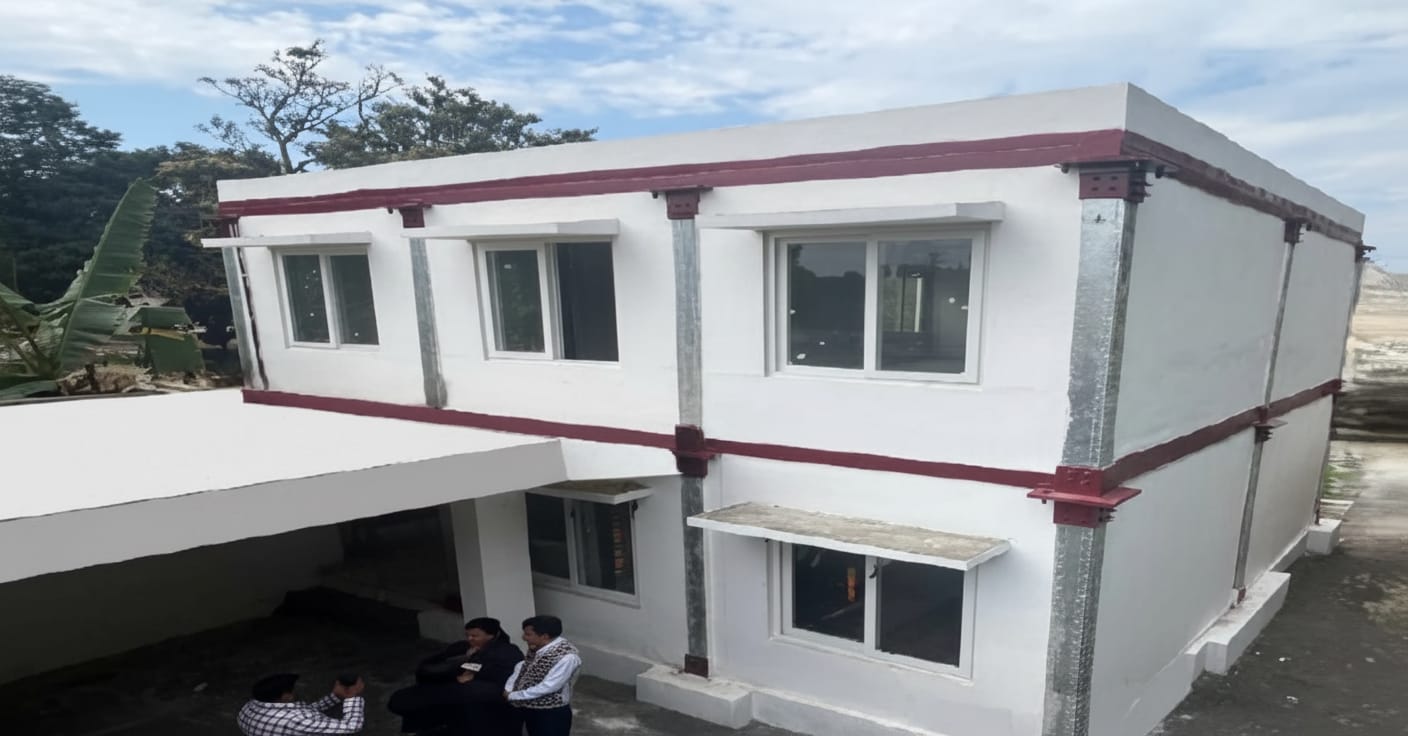
PrashantNews
In a decisive stride towards low-carbon and climate-responsive infrastructure, the CSIR–Central Building Research Institute (CSIR–CBRI), Roorkee, has successfully developed a Climate Resilient Building (CRB) at the CSIR–Central Electronics Engineering Research Institute (CSIR–CEERI) campus, Pilani.
Executed under the Fast Track Mission Mode Project of CSIR, New Delhi, the initiative addresses the urgent need to reduce carbon emissions and dependence on energy-intensive mechanical cooling, particularly in India’s hot–dry climatic regions.
The innovative facility was inaugurated virtually by Dr. N. Kalaiselvi, Director General, CSIR and Secretary, DSIR, in the presence of Prof. R. Pradeep Kumar, Director, CSIR–CBRI; Dr. P. C. Panchariya, Director, CSIR–CEERI; and Dr. Ajay Chourasia, Chief Scientist, CSIR–CBRI and Nodal Scientist of the project. Congratulating the teams, Dr. Kalaiselvi highlighted the critical role of sustainable and climate-responsive construction technologies in reducing electricity demand and fossil-fuel dependence. She emphasized that such innovations are vital for meeting India’s climate-change mitigation commitments and called for their accelerated dissemination and large-scale adoption.
Highlighting the national relevance of the initiative, Prof. R. Pradeep Kumar stated that the construction sector must urgently transition towards environmentally responsible solutions. He noted that CSIR–CBRI has been consistently advancing safe, affordable and sustainable building technologies, and emphasized that integrating climate-resilient designs into the Government’s rural housing programmes—envisaging over two crore houses—could substantially reduce carbon footprints while improving occupant comfort and resilience.
Expressing appreciation for the collaboration, Dr. P. C. Panchariya thanked CSIR–CBRI for selecting Pilani as the demonstration site, observing that the project would act as a catalyst for promoting cost-effective and climate-adaptive construction practices in the region and beyond.
Sharing the technical outcomes, Dr. Ajay Chourasia highlighted that the building achieves nearly 30% reduction in construction water consumption, maintains indoor temperatures 8–10°C lower than ambient conditions, and conforms to stringent safety and quality benchmarks, while ensuring a low embodied and operational carbon footprint. The two-storey structure, with a built-up area of 225 sq. m., was completed within 90 days, including finishing works, and realized close to 50% cost savings through prefabrication and optimized design.
The building integrates advanced CSIR–CBRI technologies such as concrete-filled cold-formed steel sections and lightweight cellular concrete blocks, combined with climate-appropriate orientation and factory-manufactured components to ensure durability, precision and sustainability. The inauguration was attended by Er. Ashish Pippal, Er. Ashok Singh, Er. Hardev Singh, along with teams from CSIR–CBRI and CSIR–CEERI.
With the commissioning of the Pilani CRB, CSIR–CBRI has now dedicated a series of Climate Resilient Building prototypes across diverse climatic zones—Composite (Roorkee), Warm–Humid (Chennai and Jorhat), Hot–Dry (Pilani), and Cold (Leh). Each prototype is scientifically tailored to regional conditions, incorporating climate-specific strategies such as solar control and thermal mass, enhanced ventilation and moisture management, heat-gain minimization, and high insulation with passive solar heating.
This landmark initiative demonstrates how cutting-edge science, indigenous innovation, and eco-sensitive design can converge to deliver affordable, scalable, and climate-resilient building solutions, reinforcing India’s pathway toward a sustainable and low-carbon built environment.