
 By Shishir Prashant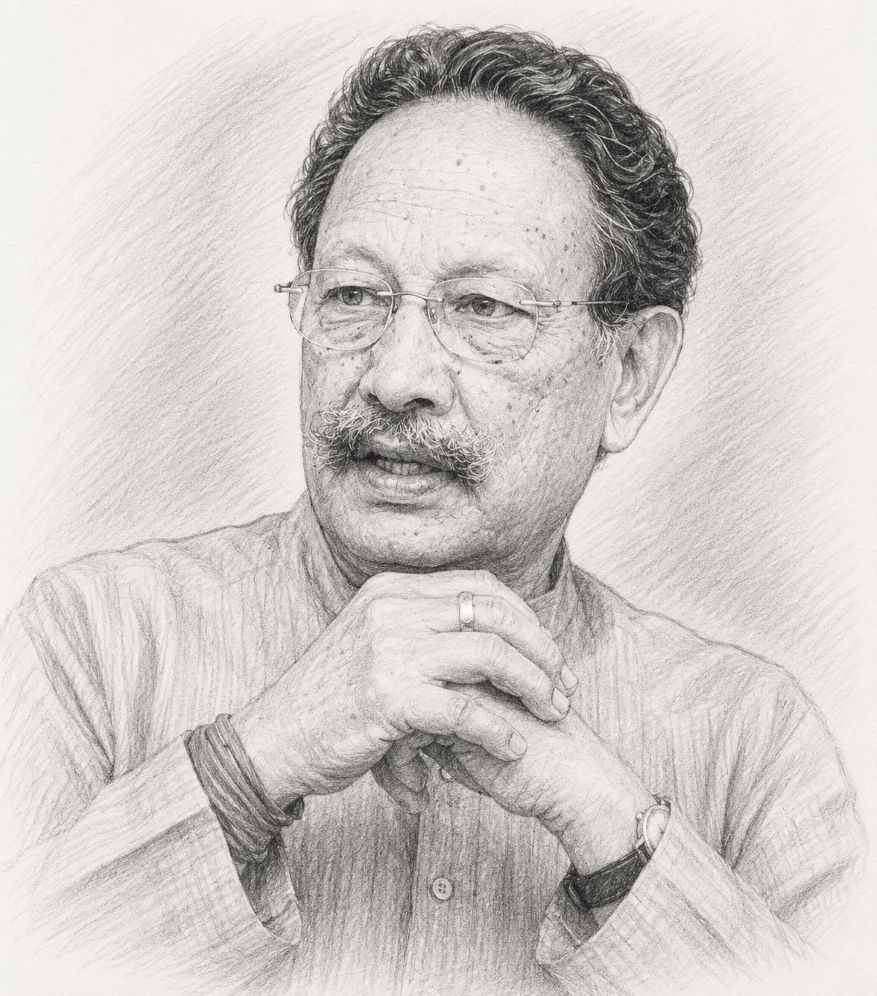
PrashantNews
Former Uttarakhand chief minister Bhuwan Chandra Khanduri, who died at the age of 91 in Dehradun on May 19, will be remembered for his impeccable integrity, disciplined lifestyle and commitment to good governance in the hill state.
A tough and efficient administrator, Khanduri served as chief minister of Uttarakhand twice — from 2007 to 2009 and again from 2011 to 2012. During his tenure, he earned a reputation for honesty, punctuality and his result-oriented approach towards administration and development works.
There are several anecdotes associated with Khanduri, but perhaps the most famous was about his strict punctuality. He was never late for any function, not even wedding ceremonies, which are usually delayed. “8 means 8, not even 8.10,” recalled one of his former aides. His out-of-the-box approach towards governance and development works also distinguished him from many of his contemporaries.
A retired Army Major General, Khanduri rose to prominence in the BJP almost by a quirk of fate. When the BJP offered him a ticket to contest the 1991 Lok Sabha elections from the Pauri constituency, he initially declined because his first cousin and former Uttarakhand chief minister Vijay Bahuguna was expected to contest from the seat.
However, at the last moment, the Congress denied a ticket to Bahuguna, son of former Uttar Pradesh chief minister Hemwati Nandan Bahuguna, who was also Khanduri’s maternal uncle. This paved the way for Khanduri to enter electoral politics. He went on to defeat senior Congress leader Satpal Maharaj from the Pauri seat and quickly emerged as a prominent BJP leader from the hill region.
Born on October 1, 1934, Khanduri was an engineer in the Army before entering politics. In 1992, he became chief whip of the BJP parliamentary party. Though he lost the 1996 election to Satpal Maharaj, he was later appointed vice-president of the BJP’s Uttar Pradesh unit.
Khanduri returned to the Lok Sabha from Pauri in 1998 and retained the seat again in 1999. During Prime Minister Atal Bihari Vajpayee’s tenure, he once again served as chief whip of the BJP parliamentary party.
In 2000, Khanduri reportedly declined a BJP high command offer to become the first Chief Minister of Uttarakhand. Instead, he readily became Union Minister of State (Independent Charge) for Road Transport and Highways where his engineering skills came in handy. Three years later, he was elevated to Cabinet rank with additional charge of Rural Development and Poverty Alleviation. As Road Transport and Highways Minister, he played a crucial role in implementing the National Highways Development Programme and gave shape to the ambitious Golden Quadrilateral project connecting major Indian cities, along with the North–South and East–West Corridor projects.
In 2004, he was re-elected to the Lok Sabha from Pauri for the third consecutive term before the BJP lost power at the Centre.
When the BJP won the Uttarakhand Assembly elections in 2007, the party leadership entrusted Khanduri with the responsibility of leading the state. However, he resigned in 2009 after facing opposition from a section within the state BJP unit. During his tenure, he introduced several reforms related to land, industries and governance.
He was instrumental in bringing the first MSME policy for the hill regions of Uttarakhand. In his second stint as CM in 2011, he enacted the first Lokayukta Act which was later scrapped by the Congress government. Since then, the successive governments in Uttarakhand are functioning without Lokayukta.
Interestingly, the BJP fought 2012 assembly elections solely on the “Khanduri hain Zaruri” campaign. But despite the popularity of Khanduri, the BJP narrowly lost the 2012 elections by just one seat. Khanduri himself suffered a shock defeat from the Kotdwar constituency.
In 2014, he once again won the Pauri-Garhwal Lok Sabha seat, though it proved to be his final electoral victory. After 2019, Khanduri settled permanently in Dehradun, where he breathed his last.
Even after his active political career, Khanduri continued to wield considerable moral influence within the BJP. In 2021, after the removal of Trivendra Singh Rawat, the BJP leadership chose Tirath Singh Rawat as chief minister, largely because of his close association with Khanduri.
Khanduri’s political legacy was further carried forward by his daughter Ritu Khanduri Bhushan, who won the 2022 Assembly election from Kotdwar — the same constituency from where her father had lost in 2012. Following her victory, many residents of Kotdwar remarked that they had finally corrected the “mistake” of 2012.
Sad news! A great statesman;visionary and truely Uttarakhandi departed today. Apart from many contributions for the state he made one very silent and progressive big decision and action he has taken to develope the medical edication department which was absent in state till his take over. Now many coming up and msny functional Govt medical colleges and nursing degree colleges in state as well as in private sector are the result of his dynamic efforts and sincerity towards state!
He will be remembered and akways be in hearts of every Uttarakhandi till infinite as essential part of our history and as great leaders stories
May God give peace to the departed holy soul
Om shanti om
Khanduri brought military discipline to governance. People in Uttarakhand still remember his tenure as the most fruitful for the nascent state. Leaders should be like him.