 By Shishir Prashant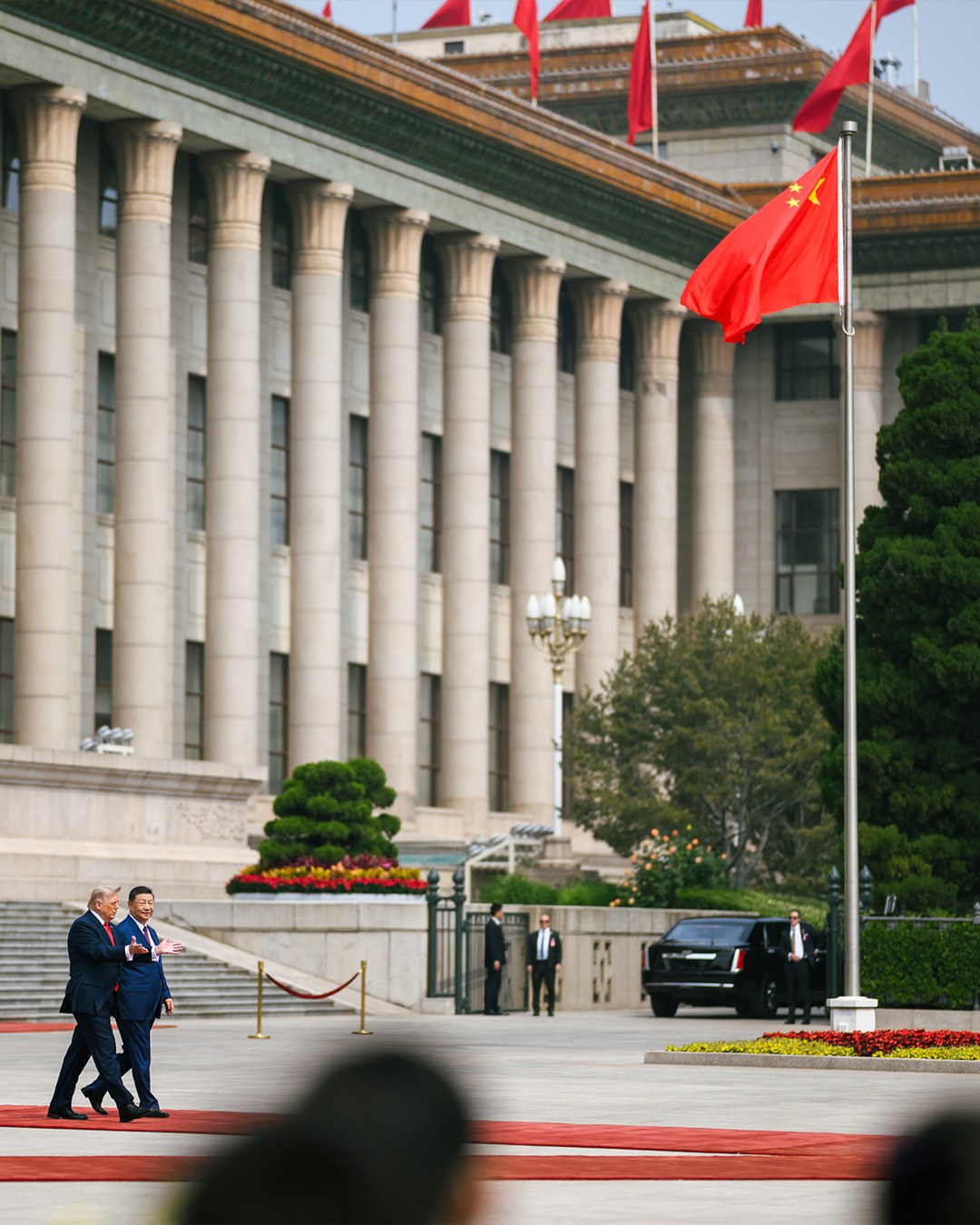
PrashantNews
President Donald Trump and Chinese President Xi Jinping on Thursday held high-stakes summit talks in Beijing amid growing global tensions over the Iran conflict.
The summit took place against the backdrop of heightened tensions in the Middle East and concerns over oil shipments through the Strait of Hormuz. Trump reportedly sought China’s support in easing regional instability and ensuring uninterrupted global energy supplies. Beijing, meanwhile, used the summit to project itself as a stable global power amid international uncertainty.
Both sides agreed that Tehran should not be allowed to produce nuclear weapons, a White House communique said.
The meeting, described by both sides as an attempt to stabilize relations between the world’s two largest economies, marked Trump’s first visit to China since returning to the White House.
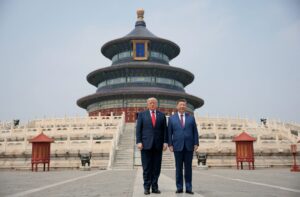
Trump received a grand ceremonial welcome at the Great Hall of the People, including a red-carpet reception, military honors and a state banquet hosted by Xi. The two leaders also visited Beijing’s historic Temple of Heaven, underscoring the symbolic importance China attached to the summit.
Taiwan emerged as the most sensitive issue during the talks. Xi warned Trump that mishandling the Taiwan question could lead to “clashes and even conflicts,” calling it the most important issue in U.S.-China ties. Trump, while emphasizing stronger economic cooperation, avoided publicly responding to Xi’s warning.
Trade and economic relations also dominated discussions. Trump pressed China for greater access to Chinese markets and increased purchases of American agricultural products and energy supplies. Accompanying Trump were several prominent American business leaders, including executives from major technology and manufacturing firms, signaling Washington’s push for a fresh economic understanding with Beijing.
Despite sharp differences, both leaders struck a notably cordial tone in public appearances. Trump praised Xi as a “great leader” and “friend,” while Xi said the US and China should remain “partners, not rivals.” The two sides also agreed to frame future relations as “constructive, strategic and stable,” according to Chinese officials.
At the conclusion of the first day of talks, Trump invited Xi to visit the White House later this year, signaling efforts by both governments to prevent further deterioration in bilateral ties. Analysts, however, noted that while the summit may reduce tensions temporarily, major disagreements over Taiwan, trade policies and geopolitical influence remain unresolved.