
 By Shishir Prashant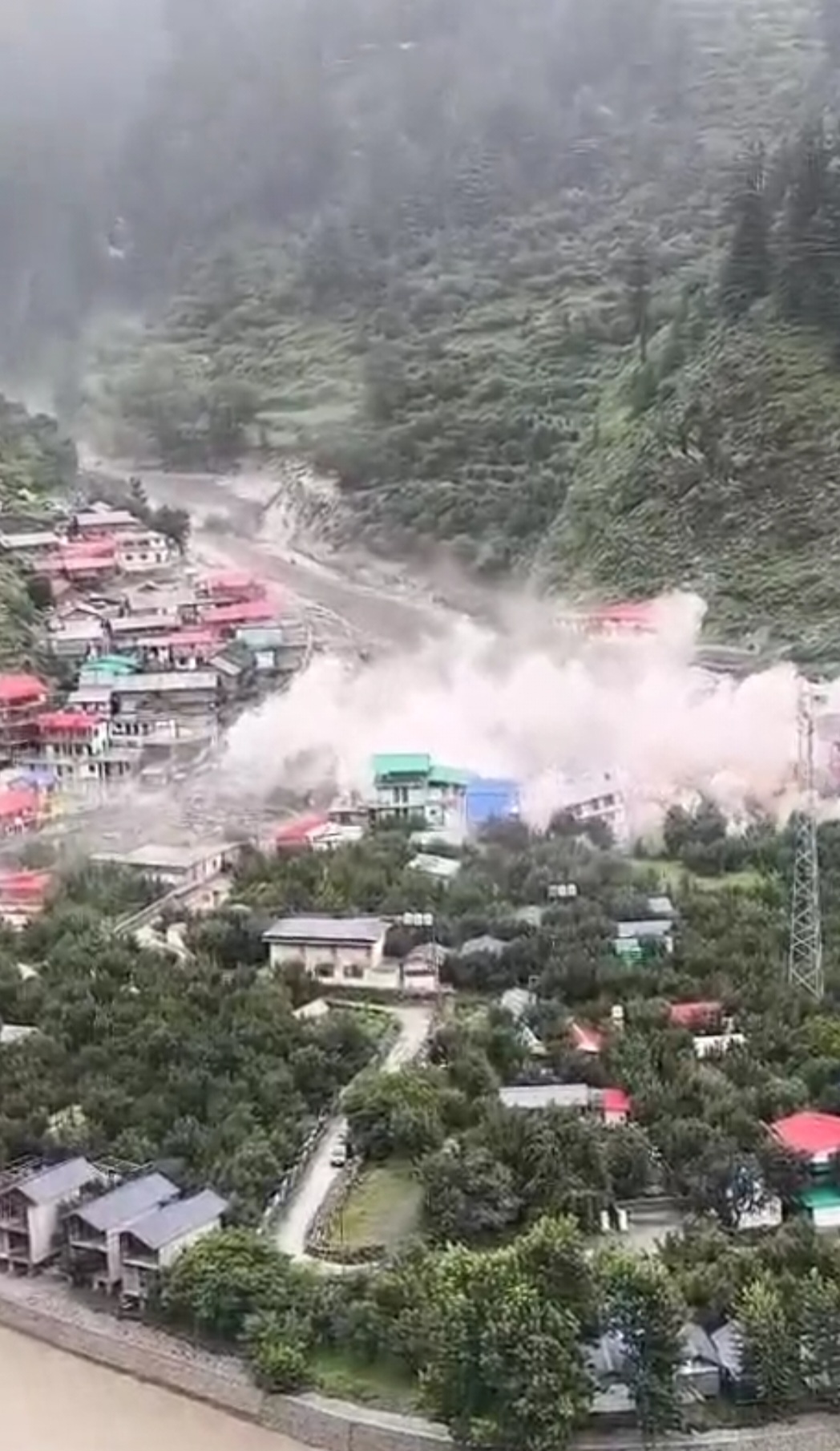
PrashantNews
One year after the devastating Dharali deluge that ravaged large parts of Uttarkashi district on August 5, 2025, the scars of the tragedy remain visible—not just on the landscape, but also in the collective memory of Uttarakhand.
Yet, despite another grim reminder of the Himalayas’ fragility, little appears to have changed in the state’s approach to development.
Barely a week before the Dharali disaster, the Supreme Court, while hearing a matter concerning environmental degradation in Himachal Pradesh, had made a stark observation: “The day is not far when the entire state of Himachal Pradesh may vanish.” The warning was directed at Himachal, but it resonated equally with neighbouring Uttarakhand, where recurring disasters have become an alarming reality.
Today, Uttarakhand’s name has become virtually synonymous with natural calamities. Cloudbursts, flash floods, landslides, glacial lake outburst floods (GLOFs), land subsidence, forest fires and earthquakes have become disturbingly frequent. While the state’s young Himalayan geology makes it naturally vulnerable, experts repeatedly point out that unplanned development has multiplied these risks.
Dharali stands as a painful example.
Until a few years ago, the picturesque village was dotted with a handful of hotels and roadside eateries. With tourism booming, however, dozens of hotels, guest houses and commercial buildings sprang up in a short span of time. Many of these structures were reportedly raised in violation of eco-sensitive zone norms and along the Khirgad, a seasonal mountain stream that transformed into a raging torrent after a cloudburst coupled with torrential rains. Within minutes, buildings that had taken years to construct were reduced to rubble, exposing the devastating consequences of ignoring nature’s warnings.
The Dharali tragedy was not an isolated event. It followed a pattern that has become all too familiar in Uttarakhand.
The Kedarnath catastrophe of June 2013 claimed more than 5,000 lives and remains one of independent India’s worst natural disasters. In February 2021, the Rishiganga disaster in Chamoli swept away hydropower projects and entire settlements. Joshimath witnessed alarming land subsidence in 2022-23, forcing hundreds of families to abandon their homes. Every monsoon now brings reports of washed-away roads, collapsing hillsides, damaged bridges and stranded villages.
Ironically, disasters are no longer confined to the rainy season. The Rishiganga avalanche struck in February, reminding everyone that the Himalayas remain vulnerable throughout the year. Scientists have also warned that Uttarakhand falls in a high seismic zone where a major earthquake cannot be ruled out. The partial collapse of the Silkyara tunnel in November 2023 was another wake-up call about the risks associated with infrastructure projects in fragile mountains.
Despite these repeated warnings, long-term policy changes have remained elusive. Every time the India Meteorological Department issues a Red or Orange Alert, emergency meetings are convened and officials are directed to stay vigilant. Such preparedness undoubtedly saves lives, but disaster management cannot substitute disaster prevention.
The real challenge lies in addressing the root causes.
Across the state, thousands of trees continue to be felled for highways, townships and other infrastructure projects. Nearly 50,000 trees were cut for the Char Dham all-weather road project alone. Environmentalists have long argued that the ecological cost of such large-scale deforestation extends far beyond the trees that are removed, destabilising mountain slopes and increasing the risk of landslides and flash floods.
Joshimath highlighted another uncomfortable truth. Residents repeatedly expressed concerns that the underground head race tunnel of the 520-MW Tapovan Vishnugad hydropower project may have aggravated the town’s instability. While NTPC rejected the allegations, scientific studies attributed the subsidence to a combination of geological fragility, inadequate drainage, slope excavation and unplanned infrastructure. Whatever the exact causes, the episode underscored the need for greater transparency and independent scientific scrutiny before undertaking major projects in ecologically sensitive regions.
Road construction methods have also drawn criticism from geologists, who argue that excessive hill cutting without adequate slope stabilisation has made many stretches increasingly vulnerable during heavy rainfall. Similar concerns have been raised over indiscriminate mining and deforestation in several parts of the state.
The Himalayas cannot be treated like the plains.
Development is undoubtedly essential for a hill state that depends heavily on tourism, connectivity and hydropower. But development that ignores ecological limits ultimately becomes self-defeating. Roads, tunnels, hotels and hydropower projects cannot come at the cost of destabilising the very mountains on which they stand.
Some encouraging steps have been taken. The Supreme Court has decided to constitute an expert committee to assess the carrying capacity of hill stations in Uttarakhand and other Himalayan states. In the past, the Uttarakhand High Court also intervened to halt environmentally damaging mining activities in ecologically sensitive areas. However, judicial interventions alone cannot replace political will and scientific planning.
Models already exist. Pahalgam in Jammu and Kashmir has enforced stringent restrictions on construction to preserve its fragile ecology. Uttarakhand and other Himalayan states must adopt similarly robust safeguards, including strict enforcement of eco-sensitive zone regulations, scientific land-use planning, hazard mapping, regulated tourism, better drainage systems and independent environmental audits for major infrastructure projects.
The first anniversary of the Dharali disaster is more than a day of remembrance. It is a moment of reckoning.
Nature has issued repeated warnings—from Kedarnath to Rishiganga, from Joshimath to Dharali. The question is no longer whether another disaster will strike, but whether we will have learnt anything before it does.
If the Himalayas are to survive for future generations, sustainable development can no longer remain a slogan. It must become the foundation of every policy, every project and every decision taken in the mountains.