
 By Shishir Prashant
PrashantNews
Armed with little more than a mobile phone, Brazil’s 80-year-old President Luiz Inácio Lula da Silva turned an electoral setback into a remarkable comeback, using selfie-style videos and an expansive WhatsApp mobilisation network to take his message directly to voters and overcome his conservative challenger, Flávio Bolsonaro, an analytical report has said.
However, political analysts and campaign observers note that while digital tools were vital for voter mobilization, they worked in tandem with ground-level activism rather than acting as a standalone silver bullet.
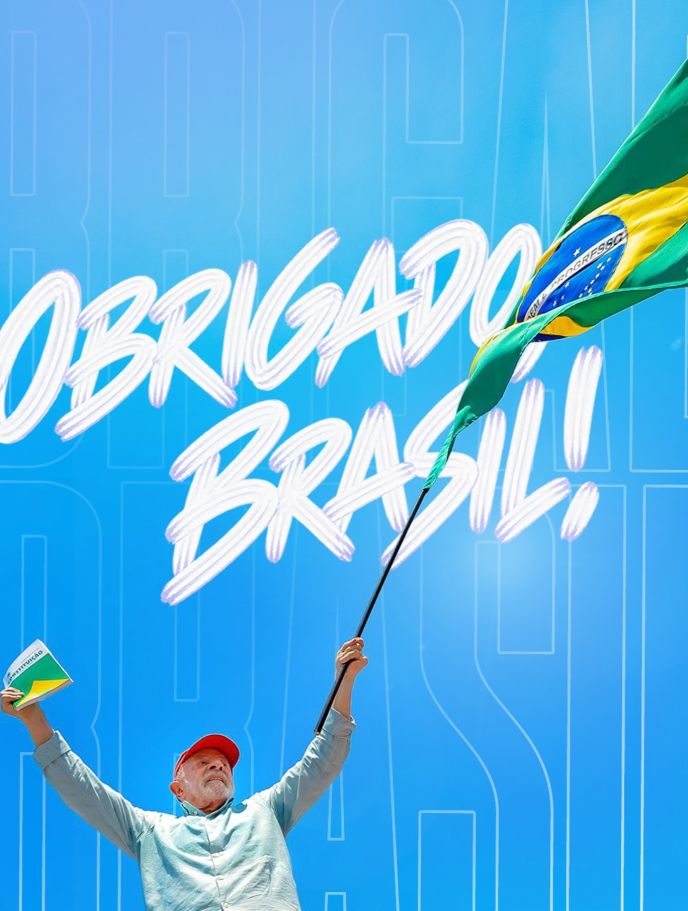
Lula’s victory in Sunday’s runoff, with 51.79 per cent of the valid votes against Bolsonaro’s 48.21 per cent, offered a striking lesson in how an old-school political campaigner can adapt to the digital age. Instead of relying solely on rallies, television appearances and conventional speeches, Lula embraced informal, direct-to-camera communication to reach voters on their phones during the decisive final weeks of the campaign.
How did the veteran politician, facing a formidable right-wing challenge, pull it off? The answer lay in a combination of grassroots mobilisation, a sharper digital strategy, economic promises and an appeal to voters who had stayed away from the ballot box in the first round.
On October 4, Bolsonaro secured 47.03 per cent of the vote against Lula’s 45.16 per cent. The result gave the challenger a lead of more than two million votes and suggested that dissatisfaction with the incumbent had become a serious electoral force.
Rather than simply repeat his earlier campaign, Lula’s team used the three-week runoff period to reach undecided voters and those who had abstained. The campaign also tried to address anxieties over the cost of living and the future of welfare programmes that have long been central to Lula’s political appeal.
One of the most striking features of Lula’s comeback was his embrace of a more direct, informal style of communication.
Lula began recording selfie-style videos on a mobile phone, speaking to voters without the formality of conventional political speeches. Congressman André Janones helped build an online mobilisation network known as “Lula’s Army”, whose WhatsApp group reportedly attracted more than 10 million members in a matter of weeks.
The digital push amplified pro-Lula messages and helped supporters reach voters beyond traditional campaign rallies and television appearances. It was complemented by demonstrations and street-level mobilisation involving students and social movements.
The campaign’s message was simple: the election was not merely a contest between two politicians, but a choice about social protection, workers’ interests and the country’s political direction.
Lula retained his longstanding support in Brazil’s impoverished northeast, winning all nine states in the region. But holding his traditional strongholds alone would not have been enough.
He also improved his position in parts of the country where Bolsonaro had performed strongly in the first round. Minas Gerais, a major electoral battleground, proved particularly important: Lula narrowly overturned Bolsonaro’s earlier advantage there.
Higher turnout also helped change the arithmetic. Abstention fell from about 21.1 per cent in the first round to roughly 19.2 per cent in the runoff, bringing millions of additional voters to the polls. The precise choices of these additional voters cannot be established from turnout figures alone, but the change was significant in a closely fought contest.
Flávio Bolsonaro, the son of former president Jair Bolsonaro, entered the runoff with momentum and a substantial conservative support base. Yet the first-round lead did not translate into a final majority.
Lula’s victory also interrupted a recent run of electoral successes for conservative candidates across Latin America. His campaign presented the contest partly as a defence of Brazil’s independence in foreign affairs, while continuing to emphasise welfare and workers’ concerns at home.
The result, however, does not mean that Brazil’s deep political divisions have disappeared. Bolsonaro won 48.21 per cent of the valid vote, demonstrating the strength of the conservative camp.
Lula’s return comes with considerable challenges. A conservative-leaning Congress is likely to constrain his legislative agenda, while public debt, household financial pressures and the cost of expanding social programmes will test his government.
For now, Lula has achieved a rare political reversal: a president who trailed his opponent in the first round has returned to office by widening his appeal, mobilising supporters and persuading enough voters that his political project deserves another term.
His campaign’s central lesson is that an early electoral setback need not be final. In Brazil, the humble mobile phone became an important instrument of political communication—but the harder test will be whether Lula’s renewed mandate can deliver tangible improvements in the lives of Brazilians who gave him another chance.