
 By Shishir Prashant
PrashantNews
Timely evacuation, advance warnings and the activation of siren systems helped avert a major human tragedy in Bhutan after a glacial lake outburst triggered flash floods in the Himalayan kingdom, washing away a popular hot-springs complex and damaging roads and other infrastructure.
Despite the scale of destruction, no deaths or injuries had been reported as of Friday, October 30, as authorities had evacuated vulnerable locations before the floodwaters arrived.
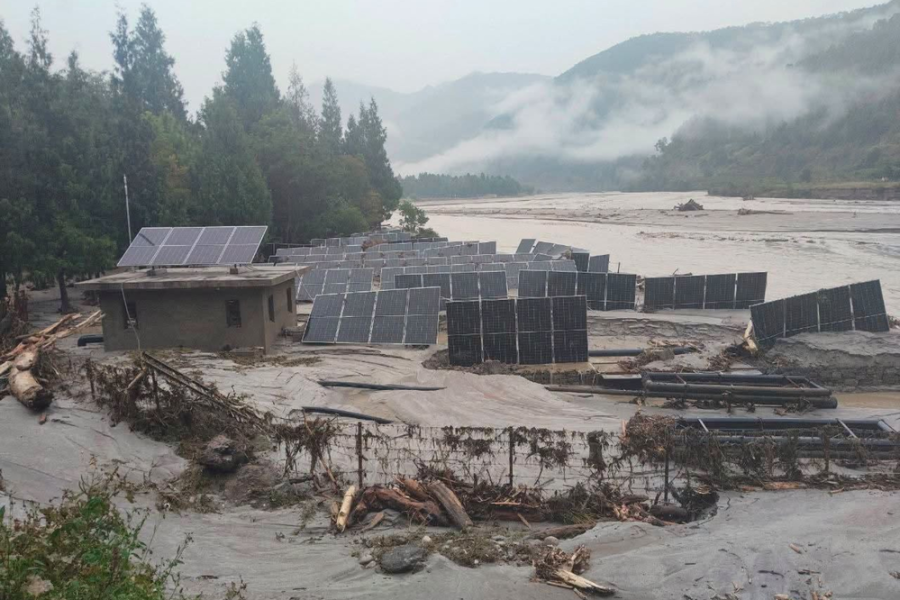
The outburst from Shintaphu Lake in Gasa district on Thursday evening sent a massive surge of water downstream through the Mo Chhu river system. The floodwaters swept away facilities at the popular Gasa Tshachu hot springs, while sections of roads were damaged and two Bailey bridges were feared to have been washed away.
The absence of casualties was attributed largely to precautionary measures taken by Bhutanese authorities. Warning sirens were activated along vulnerable stretches of the river, while residents and people staying in exposed locations were moved to safer places, reports coming from various official sources said.
Employees and visitors at the Gasa Tshachu hot springs were evacuated before the flood reached the complex. Military personnel stationed in vulnerable locations and project workers were also instructed to move to safety. Boarding students of Punakha Central School were shifted to higher ground as a precaution.
A ground report from Thimphu said evacuation operations continued overnight, with riverside communities being alerted to the danger. The early response helped ensure that people were not caught in the sudden surge of floodwater.
Bhutan’s National Centre for Hydrology and Meteorology monitored water levels in the Mo Chhu at Tashithang and Yebisa. Siren systems installed along the downstream stretches of the Mo Chhu and Punatsangchhu rivers were activated to alert communities.
The flood also damaged a section of the Punakha-Gasa highway, leaving parts of the remote Laya region inaccessible by road. The full extent of the damage was still being assessed.
The incident also prompted concern in neighbouring India, as the Punatsangchhu river enters India as the Sankosh. The Central Water Commission issued a special flood advisory for Alipurduar district in West Bengal and Dhubri district in Assam, warning of a possible sudden rise in river levels.
Authorities in both states stepped up monitoring and precautionary measures. In West Bengal’s Alipurduar district, more than 10,000 people were moved to safer locations and relief shelters following the flood warning.
The incident has once again highlighted the importance of early-warning systems, timely evacuation and coordination among disaster management agencies in vulnerable Himalayan regions, where glacial lake outburst floods can cause sudden and destructive surges with little time for people to escape.