
 By Shishir Prashant
PrashantNews
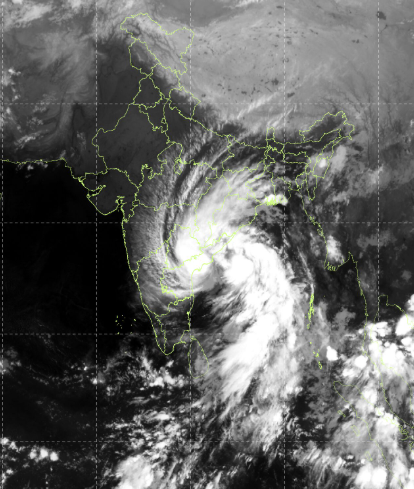
The landfall process of very severe cyclonic storm Arnab began along the Andhra Pradesh coast early Wednesday, with the India Meteorological Department (IMD) warning of destructive winds, heavy rainfall and possible coastal flooding.
The cyclone is expected to cross the Andhra Pradesh and Yanam coasts between Bapatla and Visakhapatnam, close to south of Yanam, with maximum sustained wind speeds of 125-135 kmph and gusts reaching 150 kmph, according to the IMD. The landfall process is likely to continue for about two hours, the weather department said.
The storm has been moving towards the coast over the west-central Bay of Bengal. Its outer spiral bands had already begun interacting with the land surface, prompting the IMD to advance its landfall forecast to the early hours of Wednesday.
The cyclone poses a threat to coastal districts of Andhra Pradesh, including areas around Kakinada, Yanam and Visakhapatnam. The IMD has warned of gale-force winds, widespread rain and very rough to phenomenal sea conditions along the north Andhra coast.
A storm surge of 1.5 to 2.5 metres above the astronomical tide is likely to inundate low-lying coastal areas during landfall. The surge could reach 2 to 3.5 metres near the mouth of the Godavari river, according to the IMD’s coastal weather bulletin.
Authorities have stepped up preparedness measures, with evacuation arrangements, cyclone shelters and disaster response teams put in place. The National Crisis Management Committee has reviewed preparations by the affected states and the Union Territory of Puducherry, while the National Disaster Response Force and other emergency agencies have been kept ready for rescue and relief operations.
Fishermen have been advised not to venture into the affected parts of the Bay of Bengal and along the Andhra Pradesh, Odisha and Yanam coasts. Fishing vessels already at sea have been asked to return to shore.
The IMD has also warned of heavy rainfall in adjoining regions, with the cyclone’s wider weather impact expected to extend beyond the immediate coastal belt.
Authorities have been directed to prioritise the protection of life, minimise damage to infrastructure and ensure the prompt restoration of essential services wherever disruptions occur.