
 By Shishir Prashant
PrashantNews
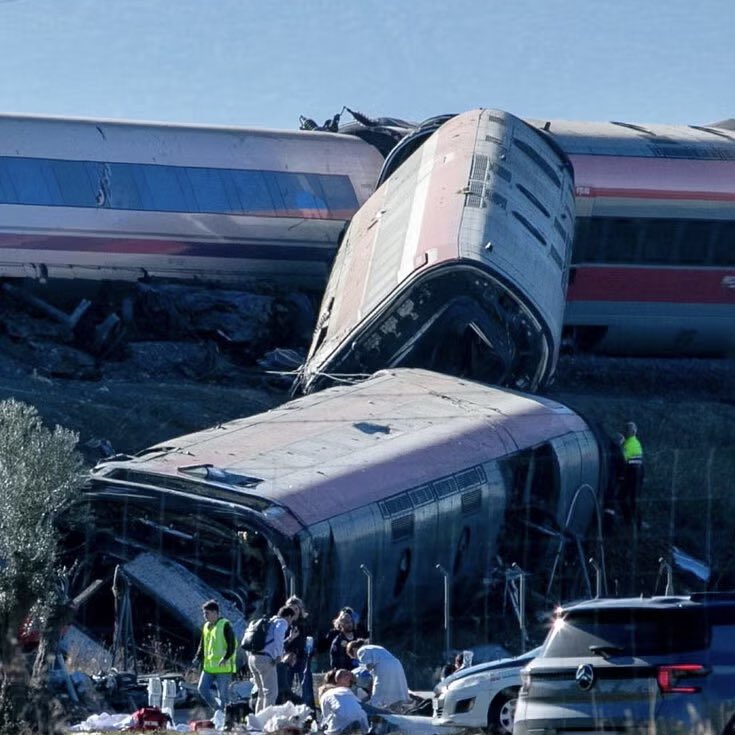
At least 68 people were killed when two high-speed trains collided in central Spain on Wednesday, in the country’s second deadly rail disaster this year, officials said.
Rescue workers continued searching the wreckage for survivors and victims as dozens of injured passengers received medical treatment.
The accident occurred near Urda in Toledo province, about 130 km south of Madrid, on the high-speed railway line connecting the Spanish capital with Seville in the south. A train operated by state-owned railway company Renfe crashed into the rear of a stationary train operated by private company Iryo, knocking carriages off the tracks and sending some down an embankment.
The regional government of Castilla-La Mancha confirmed the death toll of 68. At least 58 people required hospital treatment, while emergency teams worked amid twisted metal and badly damaged coaches to reach those trapped in the wreckage. The two trains were carrying a combined 544 passengers, according to regional authorities.
Spain’s Transport Minister Óscar Puente said an initial account pointed to a malfunction in a railway safety system that caused trains in the affected section to stop. The central control centre subsequently instructed the Renfe train to resume movement, although a stop signal remained active, he said. Investigators were examining the circumstances surrounding the decision and the collision. The cause and responsibility for the disaster had not been finally established.
Rail services between Madrid, Ciudad Real and Andalusia were suspended following the accident. Emergency services, firefighters, police and military emergency personnel were deployed to the site, while nearby authorities arranged facilities to assist survivors and accommodate the injured.
Prime Minister Pedro Sánchez cancelled his official engagements to focus on the disaster and expressed solidarity with the victims and their families. King Felipe VI and Queen Letizia also conveyed their condolences and support to those affected.
The crash comes less than a year after another deadly collision involving trains operated by Renfe and Iryo in southern Spain. That accident, near Adamuz in Córdoba province in January, killed 46 people and prompted renewed scrutiny of railway safety.
Spain has one of the world’s largest high-speed rail networks and has invested heavily in expanding it over the past three decades. Wednesday’s disaster is likely to intensify questions about railway safety systems, operational decisions and the maintenance of infrastructure.