 By Shishir Prashant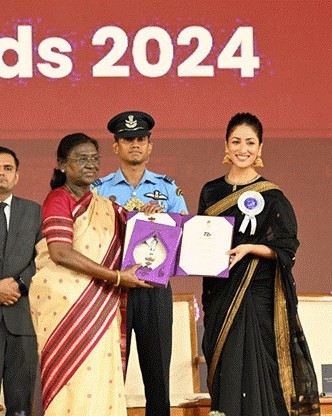
PrashantNews
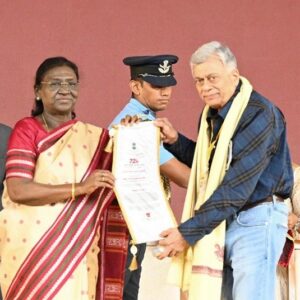
Veteran actor Anant Nag was conferred the prestigious Dadasaheb Phalke Award for 2024 by President Droupadi Murmu at the 72nd National Film Awards ceremony on Tuesday, as Indian cinema’s linguistic and cultural diversity took centre stage.
Congratulating the award winners at a glittering function in Ekta Nagar in Gujarat, President Murmu said filmmaking was a collaborative endeavour and asked the awardees to convey her appreciation to every member of their teams whose contributions helped create the winning films.
She said Indian cinema reflects the country’s diverse languages, traditions, aspirations and struggles, and appreciated the choice of Ekta Nagar as the venue, saying it symbolised India’s cultural and national unity.
Receiving the Dadasaheb Phalke Award, Nag recalled his early years in an ashram and his move to Mumbai, where he got an opportunity to act in a play. Theatre became the foundation of his career and he went on to perform in around 50 plays before entering films.
He later worked with acclaimed filmmaker Shyam Benegal and eventually chose Kannada cinema as his principal field of work, making Bengaluru his karmabhoomi. Nag, who received the Padma Bhushan from the President last year, expressed gratitude for the love and recognition he had received from people across the country.
The awards recognised a wide range of cinematic achievements. Mammootty for Bramayugam and Kartik Aaryan for Chandu Champion shared the Best Actor in a Leading Role award, while Yami Gautam was named Best Actress in a Leading Role for Article 370.
Sanjay Mishra won Best Actor in a Supporting Role for Bhakshak, while Sachana Namidass for Maharaja and Ropashree Varkady for Mithya shared the Best Actress in a Supporting Role award.
Article 370 was named Best Feature Film, while Randeep Hooda was recognised for his directorial debut Swatantrya Veer Savarkar. Kalki 2898 AD won Best Popular Film Providing Wholesome Entertainment, while Captain Miller received the award for Best Feature Film Promoting National, Social and Environmental Values. Rajkumar Periasamy won Best Director for Amaran.
The awards also underscored India’s linguistic diversity, with films in languages beyond those listed in the Eighth Schedule of the Constitution receiving national recognition.
Dholi, produced by SC Pharmachem Pvt. Ltd. and directed by Dinesh P. Bhonsle, won Best Garhwali Film, while IMBU, produced by Pichchar Studio and directed by Shivadhwaj Shetty, was named Best Tulu Film. Angen, a Santhali film directed by Ravi Raj Murmu, won Best Debut Film of a Director.
Information and Broadcasting Minister Ashwini Vaishnaw said the National Film Awards would be taken to key tourist destinations to showcase India’s cultural diversity. He also announced that the next edition of the World Audio Visual & Entertainment Summit (WAVES) would be held in October 2027.
The ceremony at Ekta Nagar brought together mainstream, regional and emerging cinema, highlighting the breadth of India’s film traditions and the diversity of voices that make up its cinematic landscape.