 By Shishir Prashant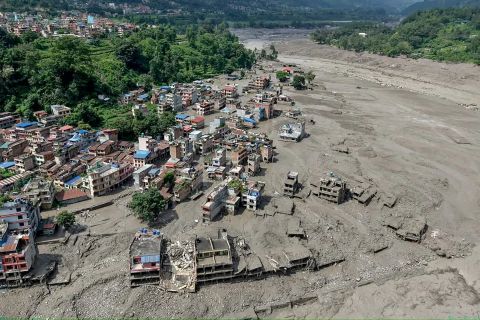
PrashantNews
As experts debate climate change, glacial lake outbursts, cloudbursts and debris flows to explain the catastrophic floods in Nepal’s Bhotekoshi valley, one uncomfortable truth is being overlooked — the river had been stripped of the very floodplains that were meant to absorb its fury.
The Bhotekoshi River, one of the most volatile Himalayan rivers, has historically carried enormous volumes of water, boulders and sediment during intense monsoon events. Yet over the years, hotels, restaurants, resorts, warehouses, roads and even homes mushroomed along its floodplain, squeezing the river into a much narrower channel. When the flood came, the river simply reclaimed the space that had once belonged to it.
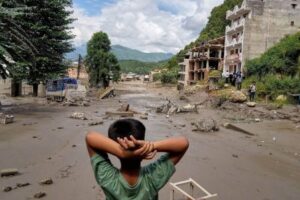
The destruction left behind tells the story. Entire settlements built close to the riverbanks were washed away, highways collapsed, bridges disappeared and buildings standing barely a few metres from the river were flattened. What looked like an unprecedented disaster was, in many ways, a predictable consequence of years of unchecked encroachment.
The lesson is painfully familiar for Uttarakhand.
Exactly a year ago, when Dharali in Uttarkashi was devastated by flash floods, PrashantNews had highlighted how rampant construction along the floodplain of the Kheergad stream and Bhagirathi rivers had amplified the disaster. The warning was simple: Himalayan rivers need room to spread during extreme rainfall events. Blocking that space turns floods into catastrophes.
Across the Himalayas, development has increasingly ignored this basic principle. Riverbanks have become prime real estate for tourism. Parking lots, guest houses, cafés and markets have crept closer to river channels. Embankments and retaining walls often create an illusion of safety, but they cannot withstand the combined force of water, mud, rocks and tree trunks rushing downstream.
“I think early early warning and strict regulatory implementation for avoiding construction and development activities in floodplains of these mountain rivers should be on top most agenda of governments, departments and scientific community,” said H P Uniyal, a former advisor to the Uttarakhand planning commission.
Scientists have repeatedly warned that climate change is making extreme rainfall events more frequent and more intense in the Himalayas. But climate change alone does not explain why the worst damage occurs in specific locations. The vulnerability is often created by people who build where rivers are meant to flow, experts said.
The Nepal tragedy is therefore not just a story of nature’s fury; it is a story of planning failure. Floodplains are not empty land waiting for development — they are part of a river’s natural system.
For Uttarakhand, the message could not be clearer. Whether it is Dharali, Joshimath, Kedarnath or the Bhotekoshi valley across the border, the Himalayas are sending the same warning again and again: Respect the floodplain, or the river will reclaim it. Ignoring that warning means rebuilding the same disaster after every monsoon.