
 By Shishir Prashant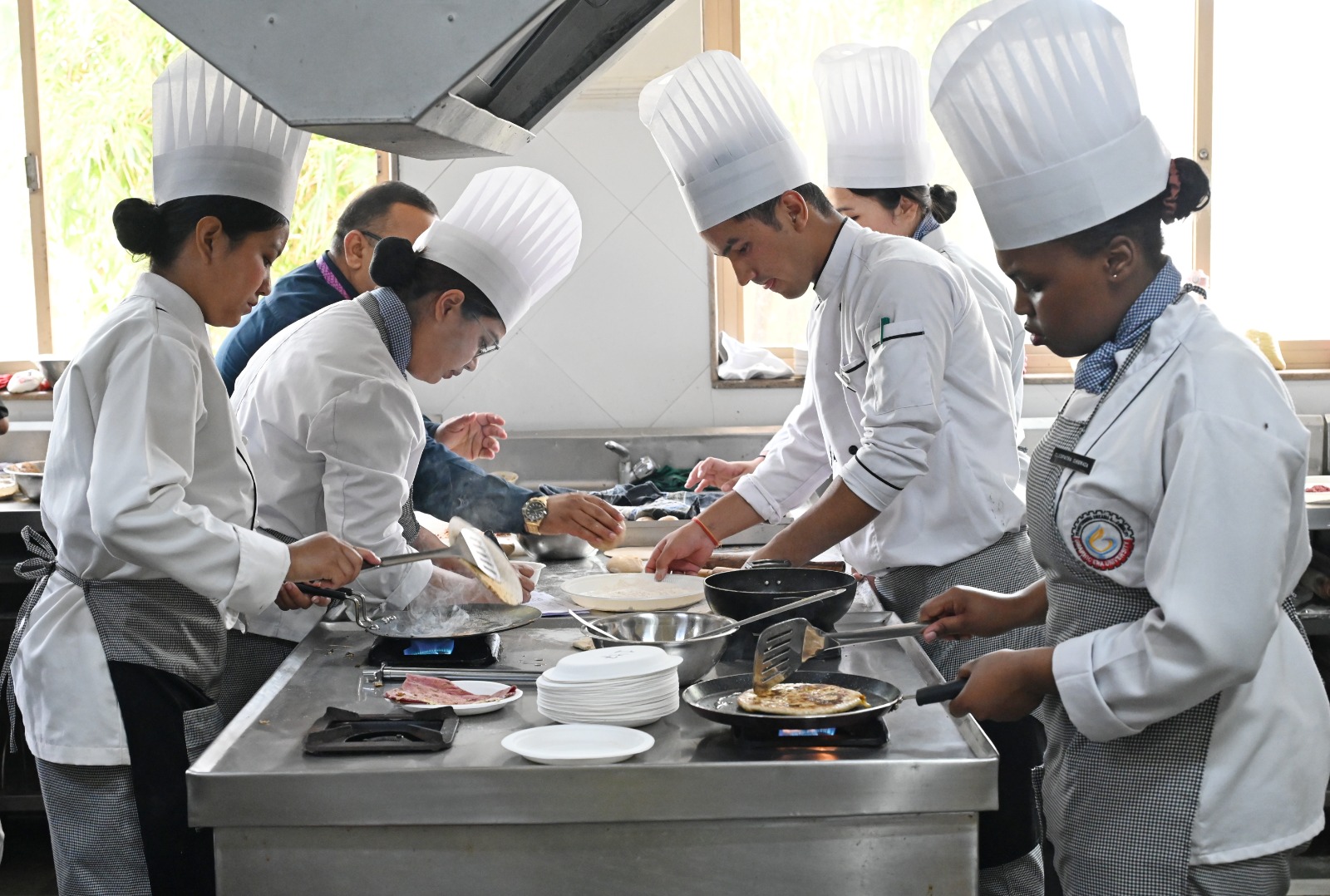
PrashantNews
Students and faculty members of the Dehradun-based Graphic Era University have performed a feat which was unheard.
They prepared a record 554 different varieties of parathas in just one hour and 28 minutes in the presence of representatives from the Asia Book of Records recently.
The record was collectively established by the students and faculty of the Department of Hospitality Management at Graphic Era Deemed University.
“This is not just a record but it serves as a symbol of national unity and cultural harmony,” said the University’s Vice-Chancellor, Dr. Narpinder Singh.
During this event, parathas transformed India’s rich culinary heritage into a vibrant and innovative celebration. Embracing the distinct flavours and identities of various regions, the parathas showcased everything from the nutritional richness of Uttarakhand—featuring ingredients like Gahat dal, Chainsoo, Jhingora, and Kafuli — to the traditional tastes of north India, such as Paneer, Sattu, peas, and radish parathas.
Meanwhile, varieties like Mawa-Gulkand, banana-jaggery, and Rasgulla parathas added a new dimension of sweetness, while culinary experiments involving tamarind-onion, jaggery-sesame, and chickpea greens (Chana Bhaji) elevated indigenous flavors to new heights.
Catering to modern dietary trends, the event also featured gluten-free, diabetic-friendly, multigrain, and high-fibre parathas, alongside colourful varieties infused with beetroot, spinach, and turmeric.
Offering both vegetarian and non-vegetarian options, the diverse fillings—ranging from fish and Kosha Mangsho to sprouts, tofu, and dry fruits—demonstrated a perfect balance between taste and health, thereby proving that the paratha is not merely a dish, but a true symbol of Indian culture and creativity.
Dr. Amar Dabral, Head of the Department of Hospitality, said in preparing the parathas for this record-breaking feat, attention was focused not merely on flavour and presentation, but also on nutritional value and their connection to the diverse cultures of various Indian states.
Dr. Ravish Kukreti, an Assistant Professor in the same department, noted that extensive research was conducted on the regional varieties and ingredients of parathas prevalent across different parts of the country to create this assortment. He further revealed that unique and nutritious ingredients—such as purple potatoes and foxtail millets—were also incorporated into the preparations.
Expressing his delight at this new milestone, Dr. Kamal Ghanshala, Chairman of the Graphic Era Group of Institutions, remarked that this achievement is not confined merely to statistics; rather, it stands as a magnificent celebration of youthful energy and cutting-edge experimentation within the realms of Indian culture and culinary arts. He said the zeal, discipline, and exceptional teamwork demonstrated by the students and the faculty in setting this record serve as a source of inspiration and are deeply rooted in the institution’s tradition of excellence.
Anand Vedant, a representative from the Asia Book of Records, was present at the event when this unique record was being established. On behalf of the Asia Book of Records, he presented a medal and a certificate to the Vice-Chancellor in recognition of the team’s success in preparing 554 distinct varieties of parathas within a span of one hour and 28 minutes.
It is noteworthy that this department has previously set two Guinness World Records and five Limca Book of Records.
The team was encouraged and cheered on by the presence of the university’s Pro-Vice-Chancellor Dr. Santosh S. Saraf, Registrar Dr. Naresh Kumar Sharma, Dean of International Affairs Dr. D.R. Gangodkar, and Dr. Rakesh Dani. The teams responsible for preparing the parathas included faculty members Mohsin Khan, Sunil Lal, Vivek Rawat, and Yogesh Upreti. Additionally, the team of students included Chintu, Ayush Rana, Jude, Avinash Gurung, Cleo, Aman Mansuri, Samiksha, Dipesh Pun, Pranav, Ashutosh, Anushka, Chaitanya, Santosh, Palak, Nishant, Bhupendra, Lokesh, Gaurav, Priyanshu, Karan, Mahak, and Mayank.