
 By Shishir Prashant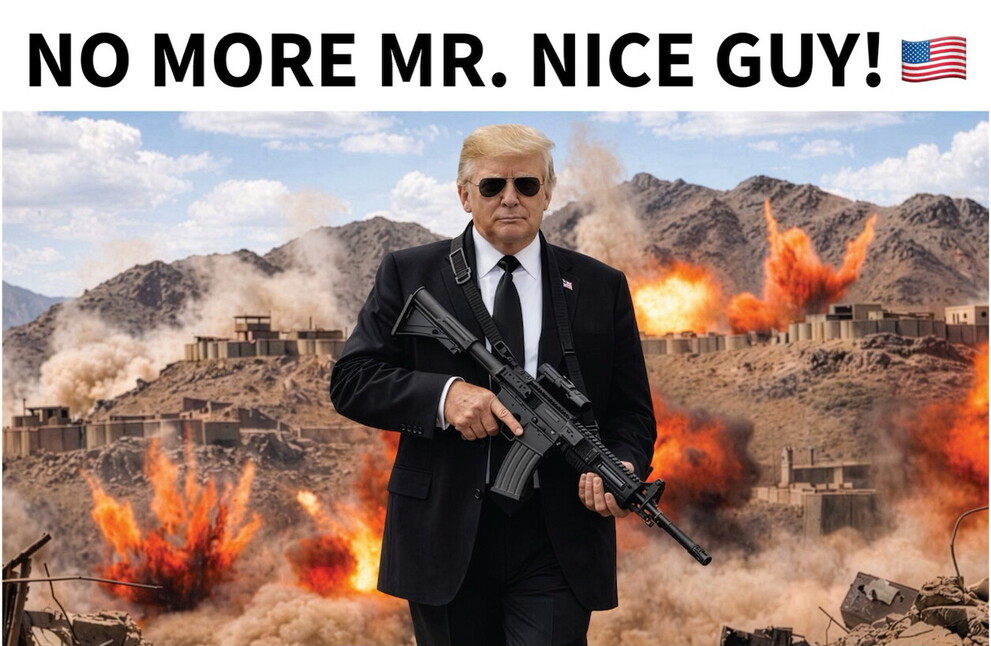
PrashantNews
President Donald Trump’s frustrations over an early deal on Iran are growing. His latest AI generated picture on Truth Social where he is holding an assault rifle in James Bond style has only highlighted the growing complications on the Iran issue. “Iran can’t get their act together. They don’t know how to sign a nonnuclear deal,” he wrote.
A day earlier, President Trump said Tehran had told the US that it was in a “state of collapse” and pleaded for reopening of the Hormuz strait.
The two social media posts of Trump only reflect that the US strategy on Iran appears to have gone astray with the focus shifting on the opening of the Strait of Hormuz instead of winning the war that was being waged for a definite purpose of striking a nuclear deal, if not the regime change was the only purpose.
A critical analysis of the war has revealed a miscalculation in U.S. strategy. What began as a military campaign aimed at weakening Iran’s nuclear and military infrastructure has increasingly been overshadowed by a far more consequential issue: control over the global energy chokepoint of Hormuz.
This shift has exposed structural flaws in Washington’s approach, where tactical success has not translated into strategic advantage.
At the heart of the problem lies a fundamental underestimation of Iran’s asymmetric capabilities. While U.S. and allied strikes inflicted significant damage on Iranian military assets, Tehran did not rely on conventional strength to retaliate. Instead, it leveraged geography. The Strait of Hormuz—through which roughly 20 percent of the global oil and gas flows—became Iran’s most powerful weapon. By threatening, disrupting, or selectively controlling this narrow passage, Iran effectively expanded the battlefield from a regional conflict into a global economic crisis.
This is where the U.S. strategy appears to have gone wrong. Washington’s initial objective was to degrade Iran’s military capacity and compel it to negotiate from a position of weakness. However, Iran shifted the terms of engagement. Rather than contesting U.S. dominance directly, it imposed indirect costs on the global economy, thereby creating political pressure on the US and its allies. This asymmetric escalation caught U.S. planners off guard.
The consequences have been profound. Shipping traffic through Hormuz has sharply declined, with daily transits dropping dramatically due to insecurity and military confrontation. Insurance costs surged, energy markets tightened, and oil prices climbed above $100 per barrel amid fears of prolonged disruption. The U.S. blockade and Iranian countermeasures have also left vessels stranded illustrating the fragility of global supply chains.
Crucially, the U.S. now faces a strategic dilemma. Reopening the Strait of Hormuz is not a simple naval task. Any attempt to forcibly secure the waterway risks escalation, potential loss of naval assets, and a broader regional war. On the other hand, failing to ensure free navigation undermines U.S. credibility as a guarantor of global trade and security. This tension between military feasibility and strategic necessity highlights the limits of American power in this context.