
 By Shishir Prashant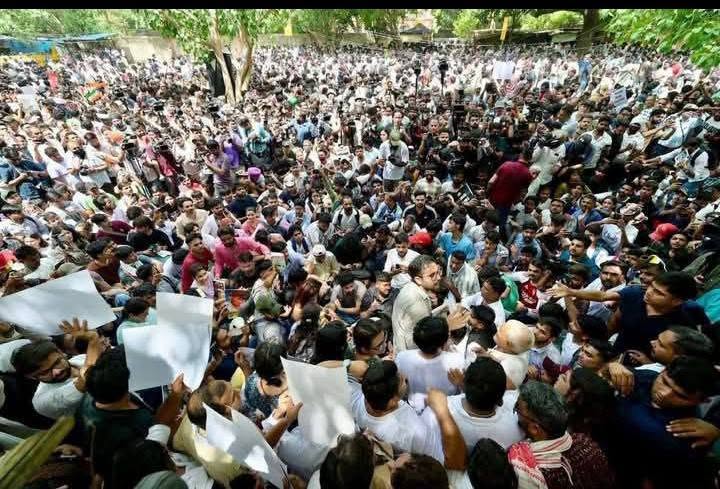
PrashantNews
After intense negotiations, the Cockroach Janata Party (CJP) on Saturday announced the withdrawal of its nationwide agitation after the Centre accepted its principal demands, including the resignation of Union Education Minister Dharmendra Pradhan, bringing an end to weeks of student-led protests over alleged NEET examination leak.
Pradhan submitted his resignation to Prime Minister Narendra Modi on Saturday, saying he was stepping down in the interest of students and to ensure that the ongoing unrest did not adversely affect their future. In a letter addressed to students, he said he had taken responsibility for the situation from the beginning and did not want the controversy to divert young people from their education and careers.
During several rounds of talks, the CJP has placed three key demands before the Centre: the resignation of Union Education Minister Dharmendra Pradhan, an assurance that no legal action will be taken against protesters, and Rs 1 crore in compensation for the families of students who allegedly died by suicide following the NEET paper leak controversy. While the government was represented by Union Health Minister JP Nadda and Minister of State for PMO Jitendra Singh, the CJP was represented by its spokespersons Saurav Das and Ashutosh Ranka at the constitution club in New Delhi.
The CJP had been spearheading a month-long protest at Delhi’s Jantar Mantar and organising demonstrations across the country, demanding Pradhan’s resignation over alleged paper leaks and examination irregularities, particularly concerning the NEET-UG examination. The movement gradually expanded into a broader campaign seeking reforms in the examination system and greater accountability from the government.
Following the resignation, CJP leaders declared the agitation a victory for students and youth. “Long live student power,” the organisation posted on social media while urging protesters to end demonstrations peacefully and return home. Party leaders said the resignation marked only the beginning of the struggle for a transparent and credible examination system and that they would continue to monitor the implementation of the government’s commitments.
According to reports, negotiations between representatives of the Centre and the CJP had continued over several rounds before the breakthrough. Besides Pradhan’s resignation, the government is reported to have agreed to a series of measures, including reforms to strengthen examination security, assurances that no punitive action would be taken against peaceful protesters, and compensation for families of students who allegedly died by suicide in connection with examination controversies.
The protests, which witnessed participation from students, professionals and youth groups, became one of the most significant youth-led movements in recent years. They also drew support from opposition parties, which argued that repeated examination controversies had undermined the credibility of the country’s recruitment and admission processes.
With the agitation now withdrawn, attention is expected to shift to the appointment of a new Education Minister and the implementation of the promised reforms aimed at restoring confidence in India’s examination system.