
 By Shishir Prashant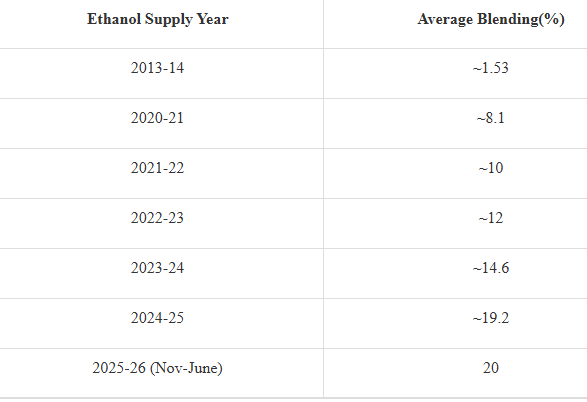
PrashantNews
The Centre on Thursday dismissed what it described as “misleading and exaggerated” claims being circulated in sections of the media and on social media regarding the Ethanol Blended Petrol (EBP) Programme, asserting that there is no verified evidence that E20 fuel causes widespread engine damage or renders older vehicles unusable.
In a detailed point-by-point clarification, the government said the E20 rollout was backed by more than two decades of phased implementation, extensive scientific validation, real-world operating experience and continuous consultation with automobile manufacturers and technical agencies.
Rejecting the claim that vehicles manufactured before 2023 cannot run on E20 petrol, the government said E15-plus fuel has been in widespread use for over three-and-a-half years, while E19-E20 fuel has been available for more than two-and-a-half years. During this period, no verified cases of widespread engine failure, abnormal corrosion or vehicle breakdown linked to ethanol blending have been reported, it said.
The government noted that ethanol blending in India began with a pilot project in 2001, followed by E5 fuel in 2006. The average ethanol blending has since risen steadily from about 1.53 per cent in 2013-14 to 20 per cent during November 2025-June 2026.
Citing industry data, it said a leading automobile manufacturer serviced 2.84 crore vehicles during 2025-26, including around 1.5 crore vehicles that were not originally certified as E20-compatible, without finding any E20-related corrosion, abnormal wear or reduction in component life. Another manufacturer tracked 1.4 crore vehicles running on E20 over an extended period and also found no ethanol-induced corrosion, while a leading two-wheeler maker reported similar field experience.
The government also rejected claims that nearly 30 crore vehicles would become unusable due to E20 fuel, pointing out that over 20 crore two-wheelers and more than three crore petrol cars have already operated on higher ethanol blends without any verified evidence of widespread engine failures.
Addressing concerns over fuel efficiency, it said any reduction in mileage in older E10-designed vehicles is generally limited to about three to five per cent and depends on factors such as driving habits, traffic conditions, tyre pressure and vehicle maintenance. It added that E20 offers benefits including a higher octane rating, cleaner combustion, improved anti-knock characteristics and smoother engine performance.
The government further said automobile manufacturers continue to honour warranties for vehicles using specification-compliant E20 fuel, reflecting their confidence in the programme. It also dismissed allegations that manufacturers were under government pressure, saying independent companies would not risk warranty claims, regulatory action or reputational damage by concealing widespread defects.