
 By Shishir Prashant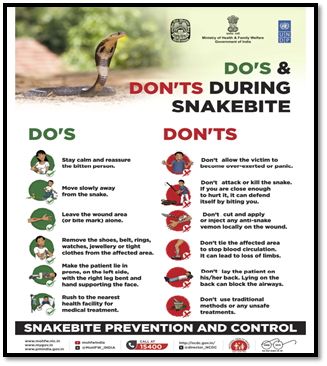
PrashantNews
Snakebites have emerged as a deadlier threat to people in Uttarakhand than leopard attacks, according to an official report of the state forest department.
The latest figures reveal that, since 2021, an average of 20 to 30 people have died every year due to snakebites across the hill state, surpassing fatalities caused by attacks from wild animals such as leopards.
“Majority of the snakebites in Uttarakhand occur in urban areas,” said R K Mishra Principal Chief Conservator of Forests (HoFF) citing the department’s findings.
The data shows that in 2020, snakebites claimed 19 lives, while 30 people were killed in leopard attacks, making leopards the leading cause of wildlife-related deaths that year. However, the trend changed in the following years, with fatalities from snakebites rising steadily even as deaths caused by leopard attacks remained the same.
Forest department officials attribute the increase in snakebite deaths to several factors, including greater human activity in agricultural fields especially during the monsoon season when snakes are more active, and delayed access to medical treatment in remote areas.
Mishra said the state is home to several highly venomous snake species, including the cobra, common krait and Russell’s viper. Most snakebite incidents occur during the rainy season, when snakes frequently enter human settlements in search of dry shelter.
The department has stressed the need for greater public awareness, timely medical intervention and improved availability of anti-venom in healthcare facilities, particularly in rural and hilly areas. Officials have also advised people to avoid handling snakes, wear protective footwear while working in fields, and seek immediate medical attention in the event of a snakebite.
The findings have prompted authorities to broaden wildlife safety campaigns beyond the long-standing focus on leopard attacks, highlighting snakebite prevention as an equally important public health concern in Uttarakhand.
In India, around 50,000 deaths occur of an estimated 3-4 million snakebites annually which accounts for half of all snakebite deaths globally. Only a small proportion of snake bite victims across countries report to the clinics and hospitals and actual burden of snake bite is grossly underreported. As per the Central Bureau of Health Investigation (CBHI) reports (2016-2020), the average annual frequency of snakebite cases in India is around 3 lakhs and about 2000 deaths occur due to snakebite envenoming.
Around 90% of snakebites are caused by the ‘big four’ among the crawlers – common krait, Indian cobra, Russell’s viper and saw scaled viper. Administration of polyvalent anti-snake venom (ASV) containing antibodies against cobra, Russell’s viper, common krait and saw scaled viper is effective in 80% of the snakebite cases, however, lack of trained human resources and health facilities to treat snakebite patients remains a cause of concern. Also, the unavailability of data on incidence, morbidity, mortality, socio-economic burden, treatment patterns etc. are the major hindrances in planning for mitigation of snakebite in India.
The centre has also launched a National Action Plan for Prevention and Control of Snakebite Envenoming (NAP-SE) in 2024. With a vision to reduce snakebite deaths by halve by 2030, NAPSE provides a broad framework for states to develop their own action plan for management, prevention and control of snakebites through the ‘One Health’ approach.