
 By Shishir Prashant
PrashantNews
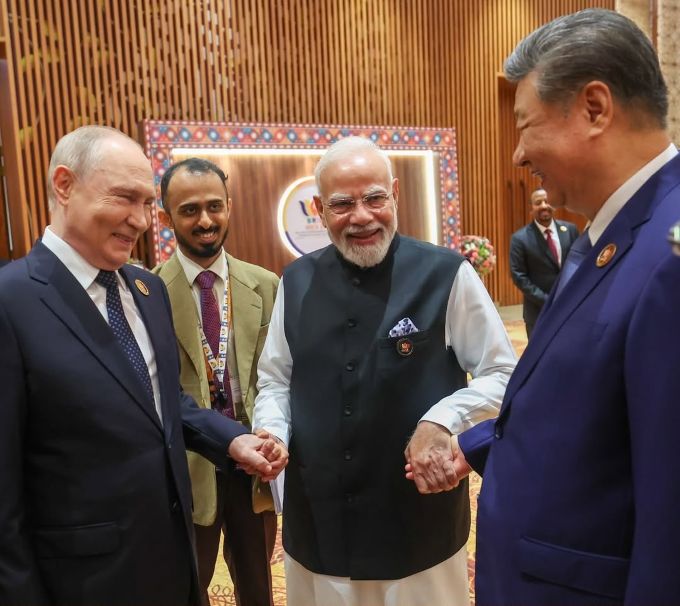
Prime Minister Narendra Modi and Chinese President Xi Jinping held a closely watched bilateral meeting in New Delhi on Saturday, seeking to give fresh momentum to India-China ties that were severely strained by the deadly border confrontations.
The meeting, held on the sidelines of the 18th BRICS Summit, comes amid a cautious thaw between the two Asian powers and growing efforts to stabilise their relationship after years of military tensions along the Line of Actual Control (LAC). It was Xi’s first visit to India in seven years.
The talks assume significance against the backdrop of the Galwan Valley clashes in June 2020 between the Indian and Chinese soldiers. The confrontation triggered a prolonged military standoff in eastern Ladakh and sharply affected political, economic and people-to-people ties between the two countries.
The two leaders discussed the need to rebuild trust and put bilateral relations on a more stable footing. Modi stressed that peace and tranquillity along the border are essential for the sustained development of bilateral ties, while both sides also looked at expanding economic engagement and people-to-people contacts.
The Prime Minister emphasized that peace and tranquility in the border areas remains an essential basis for the continued development of bilateral relations. He underlined the need for both sides to observe existing agreements and understandings on border related issues. The two leaders expressed commitment to a fair, reasonable, and mutually acceptable resolution of the boundary question proceeding from the political perspective of their overall bilateral relations and the long-term interests of the two peoples.
The two leaders took note of the progress in people-to-people ties and underscored the need to further promote cultural exchanges, business linkages and greater mobility between the two countries. On economic and trade relations, they underlined the need to address each other’s concerns, including structural trade imbalance and supply chain issues, and facilitation of meaningful and predictable market access.
The two leaders agreed that both sides must continue to expand common ground on regional and global issues, and in addressing challenges.
The meeting follows a series of steps aimed at easing tensions. India and China reached an agreement in 2024 that facilitated disengagement of troops from some of the most contentious areas along the LAC. Since then, diplomatic engagement has increased, including talks between National Security Adviser Ajit Doval and Chinese Foreign Minister Wang Yi on boundary issues and broader bilateral relations.
Economic ties are another major component of the emerging reset. China remains a major trading partner for India, with bilateral trade and Chinese imports into India having recovered despite the political tensions of recent years. The two sides are also gradually restoring direct air connectivity and easing some restrictions on travel and business.
However, significant differences remain, particularly over the unresolved boundary dispute and Chinese military activities along the frontier. India also remains wary of China’s strategic relationship with Pakistan.
The Modi-Xi meeting therefore represents less a complete rapprochement than an attempt to put relations on a more predictable track. For New Delhi, maintaining peace on the border is central to any durable improvement in ties, while Beijing has signalled its desire to approach the relationship from a “strategic” and long-term perspective.
The talks also carry wider geopolitical significance as India hosts the BRICS summit at a time of heightened tensions in West Asia, the Ukraine conflict and various economic issues plaguing the world.