
 By Shishir Prashant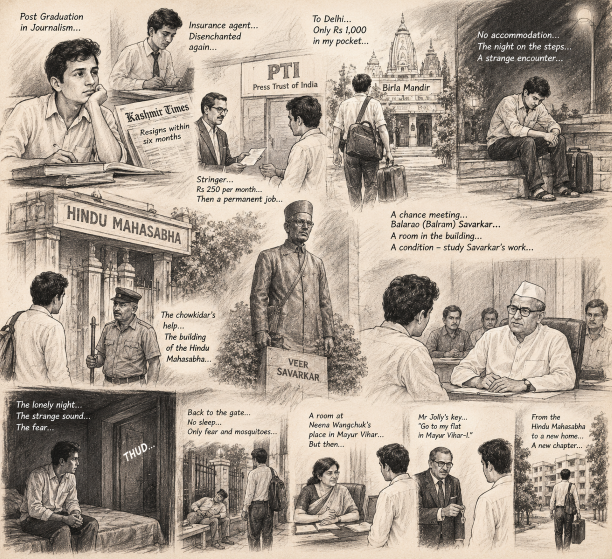
My kites, my memories
Vir Savarkar
Many of us struggle in life. But when the struggle becomes prolonged, it can turn painful. I, too, went through a period of inexplicable mental agony when I was a student.
Those were the days when I was about to complete my postgraduation in journalism. Hardship seemed to haunt me at every step, despite being the son of an MP. My father was a simple man who never sought favours from anyone. Totally frustrated with myself, I had no idea what I wanted to do in life.
I got my first job at Kashmir Times, a leading newspaper from Jammu, but resigned within six months. Thereafter, the real struggle began.
Soon, I took up a job as an insurance agent, with the promise that I would become an officer within six months in a government-owned company. But within three months, I became disenchanted with the job again.
One day, PTI General Manager, P. Unnikrishnan, visited Jammu. I met him and expressed my interest in joining the news agency. He offered me a job as a stringer at the PTI office in Jammu, with an honorarium of Rs 250 per month. Having no other option, I accepted.
During my stint as a stringer in 1989-90, I worked really hard, even breaking a couple of stories, including the resignation of Governor, K. V. Krishna Rao, which led to the longest spell of Governor’s Rule in the state. Meanwhile, the PTI bureau chief in the state, A. K. Mishra, sent a recommendation to the General Manager for my permanent appointment. The late PTI Deputy General Manager, K. S. Jolly, also helped me a great deal.
One day, when I was in a particularly sad mood, I received an appointment letter offering me the position of a trainee journalist at PTI’s Delhi office, with a stipend of Rs 1,800 per month. It was 1990. I felt some relief at last.
When I arrived in Delhi in June to join PTI, I had just Rs 1,000 in my pocket. I went straight to a guest house near Birla Mandir, close to Gol Market, where I was allowed to stay for only five days.
After five days, I still had no accommodation in Delhi, despite moving heaven and earth in search of a one-room place in umpteen localities. I had also asked my colleagues at PTI’s Delhi office to help me find somewhere to stay.
One day, the manager of the Birla guest house asked me to leave. I picked up my small suitcase and walked out. Slowly, I began walking northwards along Mandir Marg. After a few steps, I came across some large concrete steps. It was around 8 or 9 pm. I sat down and began wondering what to do next.
“Where should I go at this hour?” I asked myself. I had only Rs 500 left in my pocket.
Within a few minutes, someone prodded me from behind with a stick. I immediately stood up and saw an old man who looked askance at me.
“You cannot rest on these steps just like that,” he said giving a death snare.
“Why? Do they belong to you?” I replied irritably.
After a brief exchange of words, the old man calmed down and became a little sympathetic after hearing my plight of being turned out of Birla Temple during night.
“Do one thing. You can keep your bag (suitcase) in one of our cupboards,” he said, introducing himself as the building’s chowkidar.
When I looked at the building more closely, I realised that it belonged to the Hindu Mahasabha. Curiosity drew me inside, where I kept my suitcase in a cupboard and locked it for safety, although there was hardly anything valuable inside.
I told the chowkidar that I was going to Gol Market for dinner and would return within half an hour.
After dinner, I returned to the building and noticed a statue of Vir Savarkar. I went closer for a better look. Suddenly, someone patted me on the shoulder. I assumed it was the chowkidar. But when I turned around, I saw a man dressed in a white dhoti and kurta looking at me intently.
“Who are you?” he asked.
“Sir, I am Shishir Prashant, a journalist,” I replied, struggling to find more words.
“What are you doing here?” he asked anxiously.
“Sir, I was just looking at the statue of Vir Savarkar. I have heard a lot of stories about him,” I said.
“Okay, can you come with me?” he asked.
He took me to a nearby office inside the building. As I looked at him more closely under the bright lights, I tried to recognise who he was.
Balarao (Balram Savarkar),” he introduced himself.
“Oh!” I exclaimed, surprised. And soon I noticed his designation from a nameplate at his table.
“Yes. Please, take a chair,” said Balarao, who was president of the Hindu Mahasabha.
A few other people joined us. During our conversation, I told Balarao that I was desperately looking for accommodation and had been wandering around because I had nowhere to stay.
He took pity on me and offered me a room inside the Hindu Mahasabha building.
“I can give you this room on one condition: you must study Savarkar ji’s work in the library here,” Balarao said.
Since I desperately needed a place to stay, I readily accepted the offer.
Balarao took me to an old, dilapidated room and then showed me a study room or library containing Savarkar’s papers.
“You can stay in this room and study these papers of Savarkar. You can compile them into a book,” he said.
I nodded in agreement, and he soon left.
After some time, I began to feel completely alone in the huge building. It was around 10 or 11 pm. The office was quite far away. I sat on a bed that perhaps belonged to Savarkar.
“Did Savarkar used to sleep here?” I wondered.
Soon, I felt that someone was watching me.
“Who is there?” I called out loudly.
There was no reply.
Suddenly, a loud thud broke the silence. Something had fallen in the study room, which was now closed. I immediately went to the balcony, but there was nobody in sight.
I returned to the room. A shiver ran down my spine, and I began to sweat. An unfamiliar fear had taken hold of me.
Within moments, I rushed out of the room and shut the door. Without a second thought, I ran down the stairs to the ground floor, taking them two at a time.
When I reached the main gate, I saw the chowkidar asleep. I thought I might as well sleep outside near him. But I could not. At times, it was fear; at others, the mosquitoes that kept me awake.
The next day, when I went to the office, my senior colleague, Neena Wangchuk, offered me a room in her duplex flat at Samachar Apartments in Mayur Vihar. The rent was reasonable, and I promptly accepted the offer. At last, I felt relieved.
But soon, our DGM, K. S. Jolly, called me into his office.
“Yes, sir,” I said.
“I hear you are moving to Neena’s house,” he said.
Taking a long key out of his drawer, Mr Jolly said in his usual commanding manner, “Take this key and go to my flat in Mayur Vihar-I.”
“Sir, does that mean I should decline Neena’s offer and move into your flat instead?” I asked innocently.
“Yes,” he replied in his characteristic style.
I took the key from Mr Jolly, went back to the Hindu Mahasabha building, collected my suitcase and came out onto the road to catch an auto-rickshaw to Mayur Vihar.
Once I entered Mr Jolly’s new DDA flat, I never went back to the Hindu Mahasabha.
And that is how, during one of the most difficult phases of my life, a chance encounter with the man who headed the Hindu Mahasabha led me to an unexpected place to stay, while the kindness of a senior colleague finally gave me a roof over my head.
Some memories remain etched in the mind forever. My encounter with Balarao Savarkar, my brief stay in the Hindu Mahasabha building, and that strange, frightening night remain among them.
Vir Savarkar
Many of us struggle in life. But when the struggle becomes prolonged, it can turn painful. I, too, went through a period of inexplicable mental agony when I was a student.
Those were the days when I was about to complete my postgraduation in journalism. Hardship seemed to haunt me at every step, despite being the son of an MP. My father was a simple man who never sought favours from anyone. Totally frustrated with myself, I had no idea what I wanted to do in life.
I got my first job at Kashmir Times, a leading newspaper from Jammu, but resigned within six months. Thereafter, the real struggle began.
Soon, I took up a job as an insurance agent, with the promise that I would become an officer within six months in a government-owned company. But within three months, I became disenchanted with the job again.
One day, PTI General Manager, P. Unnikrishnan, visited Jammu. I met him and expressed my interest in joining the news agency. He offered me a job as a stringer at the PTI office in Jammu, with an honorarium of Rs 250 per month. Having no other option, I accepted.
During my stint as a stringer in 1989-90, I worked really hard, even breaking a couple of stories, including the resignation of Governor, K. V. Krishna Rao, which led to the longest spell of Governor’s Rule in the state. Meanwhile, the PTI bureau chief in the state, A. K. Mishra, sent a recommendation to the General Manager for my permanent appointment. The late PTI Deputy General Manager, K. S. Jolly, also helped me a great deal.
One day, when I was in a particularly sad mood, I received an appointment letter offering me the position of a trainee journalist at PTI’s Delhi office, with a stipend of Rs 1,800 per month. It was 1990. I felt some relief at last.
When I arrived in Delhi in June to join PTI, I had just Rs 1,000 in my pocket. I went straight to a guest house near Birla Mandir, close to Gol Market, where I was allowed to stay for only five days.
After five days, I still had no accommodation in Delhi, despite moving heaven and earth in search of a one-room place in umpteen localities. I had also asked my colleagues at PTI’s Delhi office to help me find somewhere to stay.
One day, the manager of the Birla guest house asked me to leave. I picked up my small suitcase and walked out. Slowly, I began walking northwards along Mandir Marg. After a few steps, I came across some large concrete steps. It was around 8 or 9 pm. I sat down and began wondering what to do next.
“Where should I go at this hour?” I asked myself. I had only Rs 500 left in my pocket.
Within a few minutes, someone prodded me from behind with a stick. I immediately stood up and saw an old man who looked askance at me.
“You cannot rest on these steps just like that,” he said giving a death snare.
“Why? Do they belong to you?” I replied irritably.
After a brief exchange of words, the old man calmed down and became a little sympathetic after hearing my plight of being turned out of Birla Temple during night.
“Do one thing. You can keep your bag (suitcase) in one of our cupboards,” he said, introducing himself as the building’s chowkidar.
When I looked at the building more closely, I realised that it belonged to the Hindu Mahasabha. Curiosity drew me inside, where I kept my suitcase in a cupboard and locked it for safety, although there was hardly anything valuable inside.
I told the chowkidar that I was going to Gol Market for dinner and would return within half an hour.
After dinner, I returned to the building and noticed a statue of Vir Savarkar. I went closer for a better look. Suddenly, someone patted me on the shoulder. I assumed it was the chowkidar. But when I turned around, I saw a man dressed in a white dhoti and kurta looking at me intently.
“Who are you?” he asked.
“Sir, I am Shishir Prashant, a journalist,” I replied, struggling to find more words.
“What are you doing here?” he asked anxiously.
“Sir, I was just looking at the statue of Vir Savarkar. I have heard a lot of stories about him,” I said.
“Okay, can you come with me?” he asked.
He took me to a nearby office inside the building. As I looked at him more closely under the bright lights, I tried to recognise who he was.
Balarao (Balram Savarkar),” he introduced himself.
“Oh!” I exclaimed, surprised. And soon I noticed his designation from a nameplate at his table.
“Yes. Please, take a chair,” said Balarao, who was president of the Hindu Mahasabha.
A few other people joined us. During our conversation, I told Balarao that I was desperately looking for accommodation and had been wandering around because I had nowhere to stay.
He took pity on me and offered me a room inside the Hindu Mahasabha building.
“I can give you this room on one condition: you must study Savarkar ji’s work in the library here,” Balarao said.
Since I desperately needed a place to stay, I readily accepted the offer.
Balarao took me to an old, dilapidated room and then showed me a study room or library containing Savarkar’s papers.
“You can stay in this room and study these papers of Savarkar. You can compile them into a book,” he said.
I nodded in agreement, and he soon left.
After some time, I began to feel completely alone in the huge building. It was around 10 or 11 pm. The office was quite far away. I sat on a bed that perhaps belonged to Savarkar.
“Did Savarkar used to sleep here?” I wondered.
Soon, I felt that someone was watching me.
“Who is there?” I called out loudly.
There was no reply.
Suddenly, a loud thud broke the silence. Something had fallen in the study room, which was now closed. I immediately went to the balcony, but there was nobody in sight.
I returned to the room. A shiver ran down my spine, and I began to sweat. An unfamiliar fear had taken hold of me.
Within moments, I rushed out of the room and shut the door. Without a second thought, I ran down the stairs to the ground floor, taking them two at a time.
When I reached the main gate, I saw the chowkidar asleep. I thought I might as well sleep outside near him. But I could not. At times, it was fear; at others, the mosquitoes that kept me awake.
The next day, when I went to the office, my senior colleague, Neena Wangchuk, offered me a room in her duplex flat at Samachar Apartments in Mayur Vihar. The rent was reasonable, and I promptly accepted the offer. At last, I felt relieved.
But soon, our DGM, K. S. Jolly, called me into his office.
“Yes, sir,” I said.
“I hear you are moving to Neena’s house,” he said.
Taking a long key out of his drawer, Mr Jolly said in his usual commanding manner, “Take this key and go to my flat in Mayur Vihar-I.”
“Sir, does that mean I should decline Neena’s offer and move into your flat instead?” I asked innocently.
“Yes,” he replied in his characteristic style.
I took the key from Mr Jolly, went back to the Hindu Mahasabha building, collected my suitcase and came out onto the road to catch an auto-rickshaw to Mayur Vihar.
Once I entered Mr Jolly’s new DDA flat, I never went back to the Hindu Mahasabha.
And that is how, during one of the most difficult phases of my life, a chance encounter with the man who headed the Hindu Mahasabha led me to an unexpected place to stay, while the kindness of a senior colleague finally gave me a roof over my head.
Some memories remain etched in the mind forever. My encounter with Balarao Savarkar, my brief stay in the Hindu Mahasabha building, and that strange, frightening night remain among them.