
 By Shishir Prashant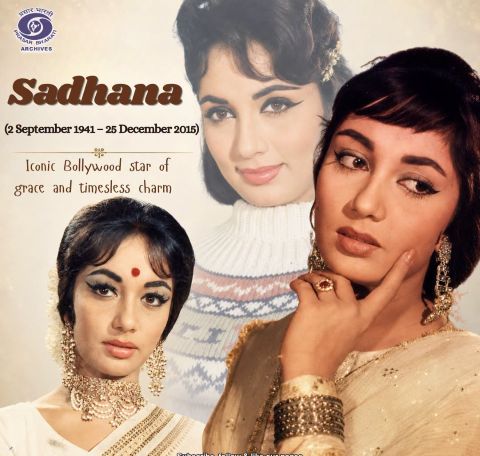
PrashantNews
There was a time when a hairstyle could become a national craze, a white sari could acquire an aura of mystery and an actress could become a cult figure without the machinery of social media. Sadhana Shivdasani was that rare star.
Born on September 2, 1941, in Karachi, Sadhana went on to become one of the most admired actresses of Hindi cinema’s golden era. Decades after she left the screen, her name still evokes a particular kind of elegance—restrained, graceful and unmistakably glamorous.
Her journey to stardom was anything but conventional. She made a brief appearance as a chorus girl in Raj Kapoor’s Shree 420 before getting an acting opportunity in Abana, the first Sindhi film made in India. She was subsequently noticed by producer Sashadhar Mukherjee and trained at his acting school. Her big break came with Love in Simla in 1960, opposite Joy Mukherjee. The film became a hit and transformed the young actress into a star almost overnight.
But Sadhana was destined to become much more than another glamorous heroine.
Her association with films such as Hum Dono, Asli-Naqli, Ek Musafir Ek Hasina, Mere Mehboob, Waqt and Arzoo established her as one of the leading ladies of the 1960s. She could effortlessly move between romance, drama and suspense, bringing an understated quality to her performances that became one of her trademarks.
Then came the films that gave her an identity few actresses have ever acquired—the “Mystery Girl.”
In Raj Khosla’s Woh Kaun Thi?, Sadhana appeared in the iconic white sari, creating an eerie and unforgettable screen presence. The haunting songs Lag Ja Gale and Naina Barse became inseparable from her image. She followed it with Mera Saaya and Anita, completing what became her celebrated suspense-thriller association with Khosla.
And then there was the “Sadhana cut.”
Her short fringe, inspired by Audrey Hepburn, became one of the most recognisable hairstyles in Indian popular culture. Young women across the country rushed to imitate it. Her fitted churidar-kurta look in Waqt similarly became a fashion statement, establishing Sadhana not simply as an actress but as a trendsetter.
Her pairing with stars such as Dev Anand, Joy Mukherjee, Manoj Kumar and Sunil Dutt produced some of the memorable films of the era. She was nominated for the Filmfare Best Actress award for both Woh Kaun Thi? and Waqt. Later, she received the IIFA Lifetime Achievement Award in recognition of her contribution to Indian cinema.
Sadhana eventually withdrew from the film industry and increasingly lived away from the public gaze. She died in Mumbai on December 25, 2015, aged 74.
Yet Sadhana’s appeal has proved remarkably resistant to time.
For those who watched her during her heyday, she was the heroine with the enigmatic smile, the graceful walk and the ability to communicate emotions without excessive theatricality. For later generations, she became a symbol of an era when Bollywood heroines could set fashion trends simply by appearing on screen.
Many actresses have been stars. Some have been fashion icons. A few have been remembered for particular genres.
Sadhana was all three. And that is why, on what would have been her 85th birthday, the “Mystery Girl” remains one of Hindi cinema’s most enduring cult figures.
Picture courtesy: All India Radio (Archives)