
 By Shishir Prashant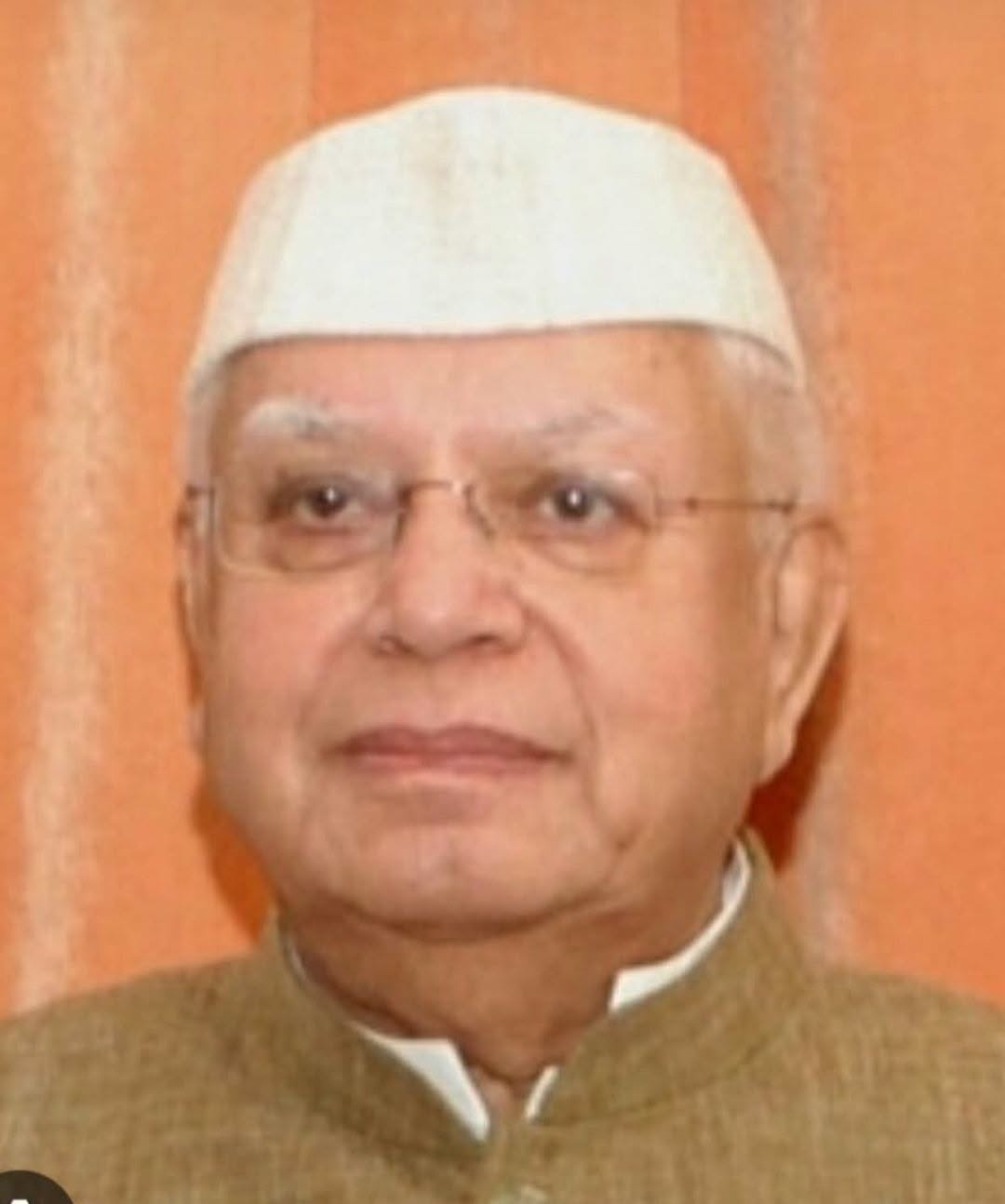
In the series My Kites, My Memories
By Shishir Prashant
Growing up, I often heard stories and gossip about the late Congress stalwart N D Tiwari from my father and others. One recurring allegation was that Tiwari had used all his political skills to please Sanjay Gandhi. Even after his death on October 18, 2018, I came across the same portrayal in a leading newspaper the following day. I remember wondering how this newspaper could reduce the life and career of such a towering political figure to the charge of sycophancy.
Before moving to Dehradun, my knowledge of Tiwari was largely confined to his political stature. He had served three terms as chief minister of undivided Uttar Pradesh and held important portfolios, including external affairs, finance and industry, in the Union government. He had also served as deputy chairman of the Planning Commission.
Yet, for a long time, my own impression of him was coloured by the perception that he was close to the Gandhi family. It was only after I began my journalistic stint in Dehradun that I started seeing another side of the man.
I first met Tiwari at the residence of the late Manorama Sharma Dobriyal, then the mayor of Dehradun, a few months before the 2002 Assembly elections. He said little during his interaction with reporters. One journalist who was there appeared annoyed that Tiwari had not criticised the BJP government in Uttarakhand, headed by B S Koshiyari. “He is very smart,” this journalist remarked after the interaction. Those words stayed with me.
In the run-up to Uttarakhand’s first Assembly election in 2002, I was hoping that the BJP would return to power. After all, the BJP was widely credited for carving out the hill state. The initial trends also appeared to support my assessment.
Harish Rawat, then the Uttarakhand Pradesh Congress Committee president, even conceded defeat on a television channel before the final results were declared. But at the PTI news agency’s Dehradun office, we were not entirely convinced that the contest was over. My wife, Deepti, and I waited for some more time as the results began to change the political picture.
By the afternoon, the verdict was clear. The Congress had won 36 of the 70 Assembly seats and was set to form the government.
I rushed to congratulate Rawat and obtain his reaction. But a phone call from Delhi changed the direction of my reporting. I was told that the Congress high command might spring a surprise by choosing N D Tiwari to head the new government.
I could not get through to Rawat. Soon, the speculation proved correct: Tiwari was the high command’s choice.
The announcement triggered anger at the state Congress headquarters on Rajpur Road. Congress workers burnt effigies of Tiwari, while several newly elected Congress MLAs gathered to protest his nomination. Many felt that the leadership had overlooked the party’s own state leaders.
The high command, however, remained firm. Tiwari was sworn in as Uttarakhand’s chief minister at the A M N Ghosh auditorium at the ONGC headquarters.
It was my first close encounter with the extraordinary ways in which Congress politics operated.
Two days later, I received a surprise call on my landline early in the morning.
“Main Narayan Dutt Tiwari bol raha hoon” — I am Narayan Dutt Tiwari, said the voice on the other end.
For a moment, I thought someone was playing a prank. But it was Tiwari himself. To my surprise, he also complimented me on my writing.
I wondered how he had found time to read my reports.
A few days later, a delegation of journalists met him at his newly built chief minister’s residence on Cantt Road, a building that has since been demolished. I could not resist asking him about his achievements as a politician and administrator. He looked at me intently, adjusted his spectacles and replied in his characteristic style:
“Maharaj, Noida toh aapne banaya hai!” (You are the one who developed Noida, sir!) I was taken aback. “Tiwari ji, it was you who developed such a vibrant city,” I responded.
He shot back, “Haan, yeh Noida toh aapne hi banaya hai!” (Yes, of course, you are the one who developed Noida!)
I had no answer and fell silent.
Perhaps that exchange captured something of Tiwari’s personality: a man who knew the value of his achievements, enjoyed a pointed remark and could leave an interlocutor searching for words. It also reminded me why he was often described as a Vikas Purush — a leader identified with development.
Another incident revealed a different side of Tiwari. Senior journalist Jay Singh Rawat once led a delegation of media persons to meet the chief minister over a problem he was facing in the construction of his house near the Vidhan Sabha-Defence Colony area.
When Tiwari arrived, Rawat promptly handed him an application. Tiwari quietly passed it on to his officer on special duty, Aryander Sharma. I was not satisfied with this familiar bureaucratic ritual. I took the application back from Sharma and handed it to Rawat.
“We have all come here seeking immediate relief. Please give the application to Tiwari ji again,” I told him. Rawat agreed and handed it back to the chief minister.
Tiwari wrote something on the application: “Can be done through the media policy.” I immediately objected. “Sir, there is no such media policy in Uttarakhand. If there is one, we are not aware of it,” I said firmly. Tiwari looked at me and asked what could be done. “Sir, you can either approve or reject the application. If you want Jay Singh Rawat’s problem to be resolved, please write that. Otherwise, you can reject it,” I replied.
My persistence appeared to infuriate him. Congress leader S P Singh, who was standing nearby, became the unexpected target of his anger. “S P Singh, don’t waste your time at my residence. Please leave!” Tiwari shouted.
But I returned to the application and urged him to take a decision. Finally, he snatched the paper from my hand and directed that the matter be resolved. The episode ended there.
Looking back, I remember it as an example of the importance of persistence when dealing with those in power. It also showed that Tiwari, despite his temper, could be pushed into taking a decision when someone refused to let a matter disappear into the bureaucratic maze.
There were other encounters that offered glimpses into the workings of power around Tiwari. On one occasion, we reached his residence at around 11 pm for some official work concerning a colleague. Aryander Sharma told us that the chief minister was occupied in his bedroom.
“We will wait,” I said. After nearly half an hour, a woman journalist emerged from the chief minister’s bedroom. The incident surprised me. I subsequently heard claims that she had benefited from a government business deal. I could not independently establish those claims, and they remain hearsay rather than something I can vouch for.
Such episodes were part of the political gossip that surrounded Tiwari. But I increasingly felt that gossip alone could never explain his political life or his standing among people who had seen the impact of his policies.
In 2009, I travelled to Rudrapur in the Kumaon region to cover a strike by employees at a Nestlé factory. During my stay, I spoke to several stakeholders, including factory owners and shopkeepers.
What struck me was the consistency with which they praised Tiwari. Many credited him with the industrial development that had transformed the region, particularly the Terai belt of Udham Singh Nagar and Nainital districts. For them, Tiwari was not merely a politician who had occupied high office. He was the leader who had helped bring factories, investment and employment to their region.
I was reminded of an anecdote involving Rahul Bajaj, the industrialist who headed Bajaj Auto. Speaking at a function organised by yoga guru Ramdev in Haridwar, Bajaj recalled how Tiwari had persuaded him to establish a factory in Uttarakhand. “Tiwari ji once rang me up and said I should set up a factory in Uttarakhand. I simply couldn’t say no to him and immediately set up the motorbike factory at Pantnagar,” Bajaj said. I was covering this function for Business Standard.
The story reinforced the impression I had begun to form: Tiwari possessed an unusual ability to persuade industrialists and translate his political influence into investment.
For the people of the Kumaon-Terai region, his legacy was visible in the factories and industrial activity that had taken root there. Whatever the criticisms of his politics, his contribution to industrial development was difficult to dismiss.
No recollection of Tiwari’s years in Uttarakhand can be complete without mentioning Nauchami Narayana, the celebrated political satire by Garhwali folk singer Narendra Singh Negi. The song, which took aim at Tiwari’s government and its controversies, became a rage. Its popularity demonstrated that the Vikas Purush was not beyond public criticism. Development and political popularity did not shield him from satire, dissent or the anger of his critics.
That, too, was part of the Tiwari story: a leader capable of attracting admiration from industrialists and supporters while becoming the target of sharp public ridicule.
His later years were also marked by personal turmoil, including the shocking murder case involving his son Rohit Shekhar and the subsequent prosecution of Rohit’s wife, Apoorva.
There are many more incidents from my years of reporting in Uttarakhand that I could recount. But these are among the ones that most clearly shaped my understanding of N D Tiwari.
When I first arrived in Dehradun, I largely viewed him through the lens of political gossip and his proximity to the Gandhi family. My encounters with him, and my conversations with people in the industrial belt of Kumaon, compelled me to look beyond that narrow image.
Tiwari could be sharp, temperamental, politically calculating and, at times, difficult to understand. But he was also a leader whose name remained closely associated with development in a region that witnessed a significant industrial transformation during his years in office.
On his birth anniversary, I remember him not as a flawless politician, but as a complex public figure whose legacy cannot be reduced to criticism.
For me, the enduring question is not whether Tiwari was without faults. No political leader is. It is whether we can acknowledge his shortcomings without overlooking his achievements.
That is why, despite all the gossip, controversies and contradictions surrounding him, I remember N D Tiwari as a man who earned the enduring label of Vikas Purush.
Brief profile:
From becoming the only political leader to serve as chief minister of two states to facing an alleged sex scandal and a legal battle over paternity, Tiwari remained in the public eye throughout his long political career.
Born into a Kumaoni Brahmin family, Tiwari began his political activism during the freedom struggle. In 1942, he was jailed for 15 months for writing anti-British pamphlets. He was lodged in a prison in his native Nainital where his father, a freedom fighter, was also incarcerated.
Tiwari entered electoral politics in 1952, winning the Nainital Assembly seat on a Praja Socialist Party ticket. He joined the Congress in 1963 and went on to hold several key portfolios in the Uttar Pradesh government and the Union government, eventually emerging as one of the country’s most prominent political leaders.