
 By Shishir Prashant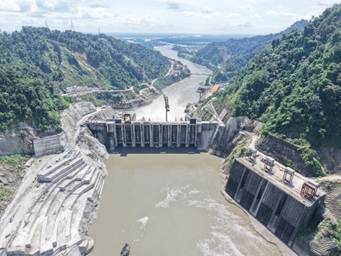
PrashantNews
The horrifying images emerging from Nepal, where scores of workers are feared trapped or missing at hydropower projects following the August 26 flash floods, have brought back uncomfortable memories in neighbouring Uttarakhand.
At least 12 hydropower projects in Nepal have been damaged. Rescue teams are struggling to penetrate tunnels buried under mud, rocks and debris to rescue the trapped workers.
For Uttarakhand, however, this is not an unfamiliar story.
On February 7, 2021, a massive flash flood in Chamoli caused extensive destruction at NTPC’s under-construction 520 MW Tapovan-Vishnugad hydropower project. The disaster swept away part of the project and trapped workers inside tunnels. Of the 204 people initially reported missing in the wider disaster, around 140 were workers at the Tapovan project site. The Rishganga hydel project was completely damaged in these floods.
Five years later, another tragedy has struck an under-construction hydropower project in the same Himalayan region. The 444 MW Vishnugad-Pipalkoti project on the Alaknanda was hit by a landslide and sudden inflow of water and debris on August 13, 2026. Eleven workers were killed mostly inside the project’s tail-race tunnel.
The repeated disasters raise a larger question: are India’s Himalayan hydropower projects adequately designed for a mountain system whose hazards are becoming increasingly unpredictable?
Hydropower is an important source of relatively low-carbon electricity, and Uttarakhand has enormous hydroelectric potential. But generating power in the Himalayas involves tunnelling through young, fractured and geologically complex mountains. The risks do not end with the construction of dams. Roads, blasting, muck disposal, tunnels and underground powerhouses can all increase the scale and complexity of a disaster when extreme rainfall, landslides or sudden floods occur.
The environmental concerns are not new either. In 2013, the Supreme Court, while examining hydropower development in Uttarakhand following the devastating floods, noted that the cumulative ecological impact of existing, under-construction and proposed projects in the Alaknanda and Bhagirathi basins had not been adequately assessed. It ordered a detailed scientific examination and temporarily halted further environmental and forest clearances for hydropower projects in the state.
The question today is therefore not simply whether Uttarakhand should generate hydropower. It is whether the pace, scale and location of such projects are compatible with the Himalayas’ geological and climatic realities—and whether worker-safety protocols have kept pace with those realities.
Nepal’s disaster offers a grim reminder. For workers several kilometres inside a mountain, a flash flood outside can turn a workplace into deathtraps within seconds.
The Himalayas may provide the water and terrain needed to generate electricity. But the human cost of treating these mountains like ordinary construction sites could prove far higher than the electricity they produce.