 By Shishir Prashant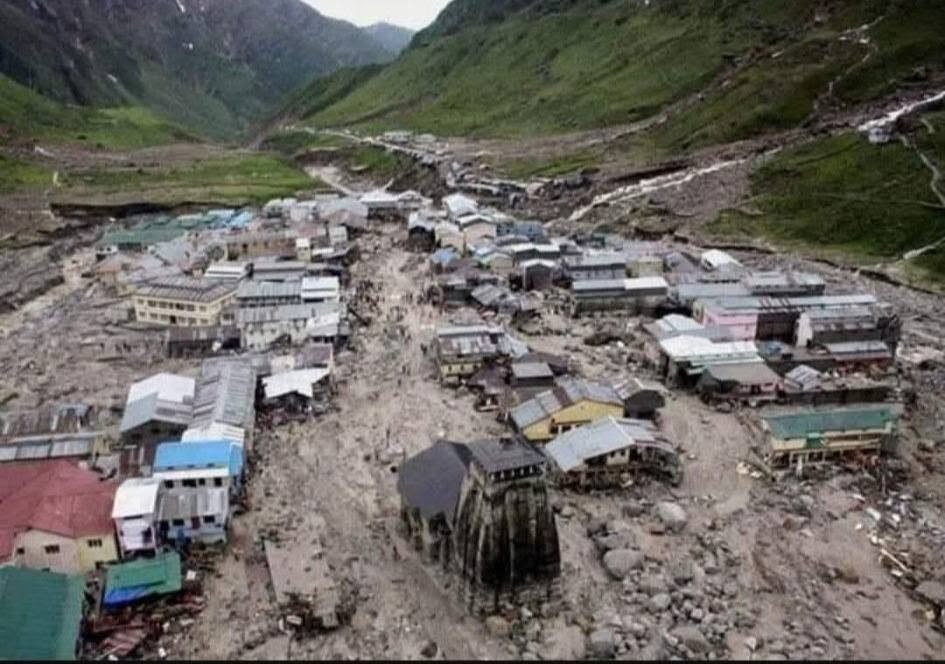
PrashantNews
With the Uttarakhand Assembly elections just months away, Chief Minister Pushkar Singh Dhami must be praying for a relatively disaster-free monsoon season.
The challenge is particularly daunting as his government is still grappling with the aftermath of a series of natural disasters that have struck the state in recent years. Any major weather-related calamity during the monsoon could not only test the administration’s disaster-management capabilities but also revive concerns over the state’s unresolved ecological vulnerabilities and development policies.
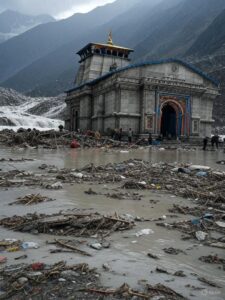
Thirteen years after the Kedarnath deluge of June 16-17 in 2013, Uttarakhand continues to witness a series of disasters, underscoring the persistent ecological vulnerabilities of the Himalayan state.
Successive governments have struggled to address the complex environmental challenges posed by rapid development, climate change and fragile mountain ecosystems. Recent disasters in Dharali and Tharali served as stark reminders of these unresolved issues, causing widespread loss of life, extensive damage to property and disruption of livelihoods.
The recurring incidents have raised fresh concerns over the sustainability of infrastructure projects, unplanned construction and the state’s preparedness to cope with increasingly frequent extreme weather events, social activists and environmentalists said.
Despite repeated warnings from scientists, environmentalists and expert committees, concerns over unchecked development, fragile ecosystems and climate change remain largely unresolved.
The Kedarnath tragedy, triggered by the Chaurabari lake outburst and unprecedented rainfall, claimed thousands of lives and devastated large parts of Uttarakhand. The disaster exposed the ecological fragility of the Himalayan region and sparked a national debate on sustainable development in mountain states.
In the years that followed, reconstruction and infrastructure expansion accelerated across the Himalayas. Roads have been widened under strategic and pilgrimage connectivity projects, hydropower schemes like NTPC’s 520 Mw Tapovan Vishnugaurd have expanded, and tourism has witnessed unprecedented growth. While these initiatives have improved accessibility and boosted local economies, experts argue that environmental safeguards have often lagged behind development ambitions.
The frequency of extreme weather events in the Himalayas has increased significantly over the past decade. Incidents s00uch as the Chamoli glacier-related disaster in 2021, recurring landslides along the Char Dham routes, and flash floods in Himachal Pradesh and Uttarakhand in 2025 have reinforced concerns about the region’s growing vulnerability. Scientists attribute much of this trend to climate change, which is accelerating glacier retreat, altering rainfall patterns and increasing the likelihood of glacial lake outburst floods.
Environmentalists contend that indiscriminate construction, hill cutting, deforestation and encroachment along riverbanks continue to destabilize mountain slopes. The cumulative impact of hydropower projects and large-scale infrastructure works has also raised questions about the carrying capacity of sensitive Himalayan valleys.
Government agencies have introduced early warning systems, disaster response mechanisms and stricter monitoring measures since 2013. However, experts maintain that disaster preparedness alone cannot substitute for ecological conservation. They argue that long-term safety requires integrating environmental concerns into every stage of planning and development.
As Uttarakhand commemorates the victims of the Kedarnath disaster, the tragedy remains a stark reminder that the Himalayas are not merely a landscape to be developed but a fragile ecosystem demanding careful stewardship. Thirteen years later, the central question remains unchanged: whether lessons from Kedarnath will translate into sustainable policies before another ecological warning turns into a human catastrophe.